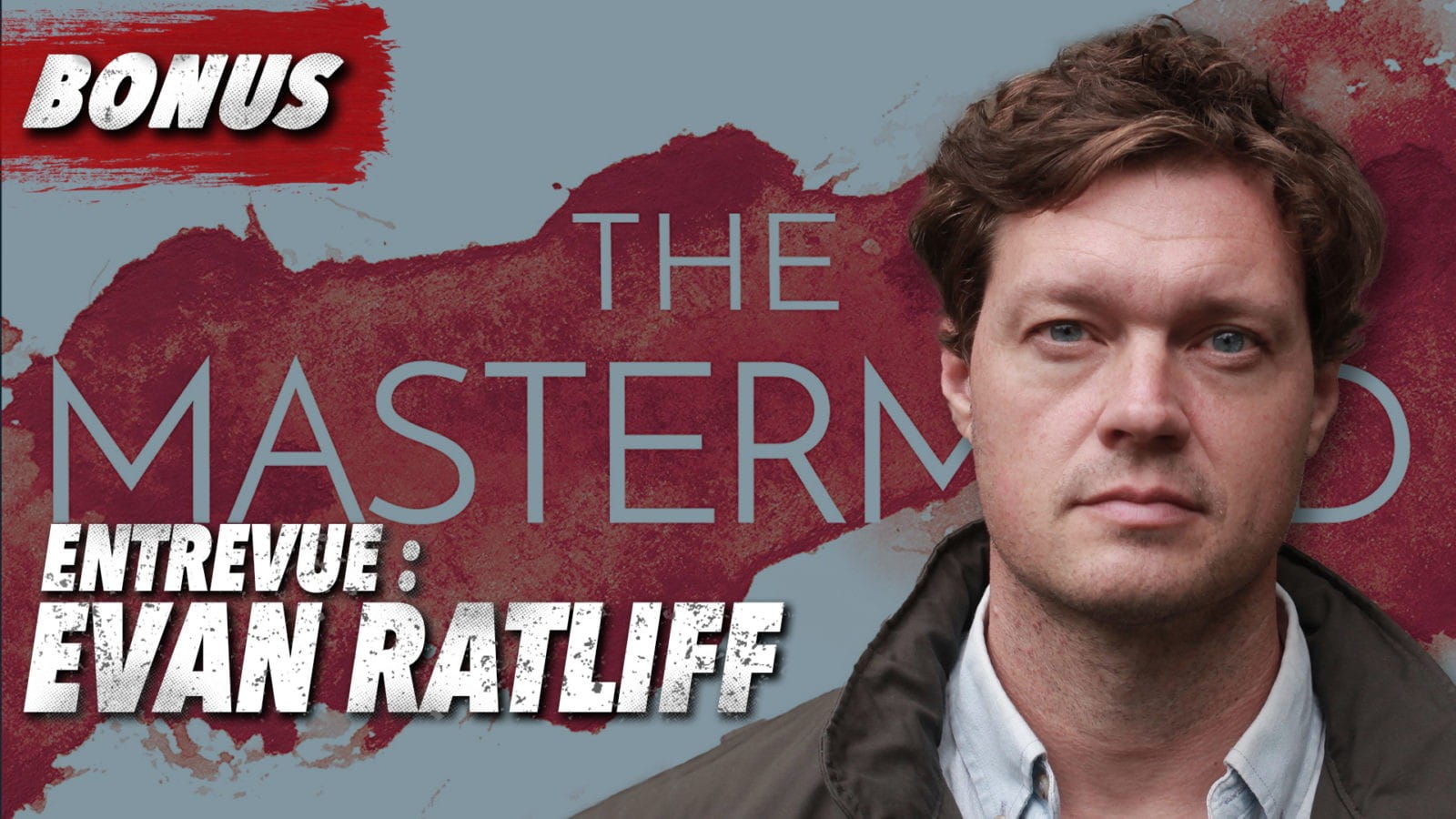
(Interview en anglais) Dans cet épisode bonus, Seb et Emile discutent avec Evan Ratliff, journaliste pour Wired et auteur du livre The Mastermind sur Paul Le Roux. Evan nous explique comment il est venu à s’intéresser à ce grand cybercriminel, comment il l’a traqué et comment il a géré ses informateurs. En plus de cela, nous discutons d’une expérience qu’il a réalisé en 2009 avec Wired, en tentant de disparaître pendant un mois à l’ère numérique!
Épisode
Bonus - Paul Le Roux - Interview avec Evan Ratliff
Audio
Écouter l’épisode
Transcription de l’épisode
Lire la transcription
Transcription automatique. Certains mots ou noms propres peuvent être inexacts.
Sébastien Lévesque, comment ça va aujourd'hui?
Ça va bien et toi, Emile Gauthier?
Ça va très bien parce qu'on reçoit un invité de marque, une grosse prise pour
distorsion aujourd'hui. On reçoit le journaliste Ivan Ratliff, qui est basé à New York.
On avait entendu parler de lui il y a environ une dizaine d'années. Ivan Ratliff avait
fait à l'époque la couverture du magasin Wired parce qu'il avait décidé de disparaître
pendant quelques mois, disparaître dans la nature en laissant quelques traces numériques
pour que les lecteurs de Wired le retrouvent. C'était une expérimentation assez intéressante
et justement, il avait fait la couverture de Wired avec ça. Ça avait été une grosse
histoire qui nous, nous avait beaucoup inspiré à distorsion.
Oui, vraiment. C'était une époque avant Facebook, avant la masse de réseaux sociaux.
Le monde numérique était vraiment différent quand il expérimentait ça comparativement
aujourd'hui.
Exactement. Et puis, ce qui arrive, c'est que l'an dernier, Ivan Ratliff a récidivé,
il a écrit un livre sur Paul Leroux dont on a parlé dans un épisode en deux parties
très récemment. Paul Leroux qui est un grand cybercriminel, qui a monté un empire
sur le web allant de la vente illégale de médicaments jusqu'au trafic de drogue,
jusqu'au trafic d'armes, même jusqu'à engager des mercenaires pour faire assassiner
des gens. Donc, c'est quelqu'un qu'on a très peu entendu parler, je dirais, dans
la francophonie, mais qui a fait beaucoup de vagues, surtout aux États-Unis, parce
que Paul Leroux est devenu un informateur pour la DIA. Et bien, Ivan Ratliff, lui,
a réussi à retracer l'histoire de Paul Leroux et sa montée au sein de cet empire
du web. Et puis, on trouvait que c'était important de tenter de le rejoindre du
moins parce que lorsqu'on a fait nos épisodes, on n'a pas eu le choix de s'inspirer
beaucoup de son livre, étant donné que c'est un des seuls qui est allé vraiment
aussi loin dans son investigation. On va pouvoir discuter justement du cas de la disparition
à l'ère numérique de son article de Wired, qui l'a fait il y a environ dix ans,
et évidemment, eh bien, on va revenir sur l'histoire de Paul Leroux parce qu'on
a plein de questions pour lui. Donc, sans plus tarder, on s'en va rejoindre
le journaliste Ivan Ratliff, qui est localisé à New York, mais on va le rejoindre
à distance. Et c'est parti!
Oui, monsieur!
Oui, c'est un bon point. Pouvez-vous nous dire un petit peu plus sur votre
background de journalisme technologique et investigatif? Parce que, en regardant
la plupart des articles que vous avez écrit, et aussi le livre que vous avez écrit,
la technologie semble être au centre de votre travail.
Oui, c'est ça. C'est surtout parce que c'est comme ça que j'ai commencé
mon journalisme en premier lieu. J'étais en fait un peu de programmeur,
je n'étais pas un très bon programmeur, mais à l'école, j'ai travaillé comme un
consulteur de computers, où j'ai fait du programme et de l'installation du software.
Donc, j'avais un background technique pour comprendre cette chose. Et ensuite,
j'ai eu mon premier travail, le seul journalisme que j'ai pu obtenir à l'époque,
une internship à Wired Magazine, en partie parce que j'avais ce
connaissance technique. Donc, même dès le début de ma carrière,
j'étais sort de sortir du monde, d'essayer d'expliquer la façon dont
la technologie changeait le monde. Et toutes les histoires que j'ai été
intéressées sont que la science ou la technologie est quelque part là-bas.
Et puis, au cours du temps, j'ai sorti d'être plus d'un journaliste.
Mais j'ai encore souvent retourné à ces routes, en partie parce que
quand j'ai commencé, la technologie était une sorte d'expérience,
pas une expérience, mais quelque chose qui était sort de l'extérieur
de l'expérience de beaucoup de gens, ou considérée de l'extérieur
de l'expérience de beaucoup de gens. Et maintenant, bien sûr,
c'est une expérience qui a pris la place de tout le monde.
Et donc, chaque histoire a une sorte d'expérience technique.
Et c'est vraiment vrai. Et comment est-ce que,
ou comment a-t-il travaillé à Wired à l'époque,
parce que ça a l'air d'être un travail rêve pour un journaliste
arrêté dans la technologie en général.
C'est vrai. C'était assez fou, parce que j'y arrivais,
disons, j'y arrivais en 1999, je pense, 98, 99.
Et donc, c'était dans le milieu de la boom du dotcom.
Donc, c'était vraiment, je veux dire,
c'était un moment étrange, parce que vous aviez tout,
tout ce qui se passait partout, vous savez,
des compagnies qui ont lancé, et qui font de grandes parties,
et juste une ridicule, vous savez,
échec lorsqu'il s'est arrivé à ce que les compagnies
étaient en train de payer. Et bien sûr, il y avait,
pour beaucoup d'entre eux, il n'y avait rien en dessous.
Il n'y avait pas de revenu ou n'importe quoi.
Mais c'était un bon moment pour être
un magazine de Wired en particulier,
parce qu'il y avait tellement de histoires à écrire,
et il y avait aussi tellement de pages à remplacer.
Il y avait tellement d'advertissage,
et c'était juste un temps flou.
Bien sûr, vous savez,
il y a un an et demi plus tard,
et la boom de Dotcom s'est cassé,
et nous étions dans un monde différent.
Donc, j'ai eu l'occasion de voir le boom et le buzz
presque dès le début de ma carrière.
Mais oui, c'était un travail rêvant,
parce que j'étais en train d'apprendre le journalisme,
et comment réparer des histoires,
et comment écrire des histoires.
Je n'étais pas en train d'apprendre le journalisme.
Donc, j'étais en train d'apprendre ça,
en même temps que j'ai senti que
la technologie avait vraiment un impact dans le monde
que ça n'avait pas précédemment,
c'était d'entrer dans la vie des gens.
Donc, cette combinaison de choses a fait
un temps assez excitant.
Je pense que c'était dur pour Wired,
et il y a un temps,
parce qu'ils avaient tout pour eux-mêmes.
Pas beaucoup de places
couvraient ces types de histoires.
Et puis, soudain,
tout le monde couvrait ces types de histoires,
et ça a devenu quelque chose de différent
pour essayer d'expliquer cette chose à tout le monde.
Oui, et il y a aussi,
vous parlez de 1999,
Y2K était autour de la corner,
en même temps,
donc je pense que c'était quelque chose
à voir de l'intérieur.
Oui, c'était comme si on avait tout.
On avait l'excessif dans l'économie,
on avait l'apocalypse qui venait,
tu sais,
ils étaient sortes de...
Et c'était juste le début de ce type de crime cyber
qui était quelque chose
où on pouvait vraiment,
tu sais, faire de l'argent.
Donc, l'utopie de l'intérieur était là,
ils étaient encore à ce moment,
c'est drôle maintenant,
quand tu regardes l'Internet,
les gens étaient encore,
tu sais, juste vraiment excitées
de voir l'Internet comme une maison
pour la free speech,
et des choses comme ça.
Donc, il y avait cette vue de l'utopie optimiste,
et puis il y avait cette sorte de dystopie
qui commençait à s'accrocher.
Donc, d'un point de vue,
de raconter des histoires,
c'était un temps idéal
de se montrer et de voir tout ça.
Et certaines des premières histoires
que j'ai faites étaient des artistes de scams
et des gens qui étaient en avantage
de ce moment.
Avant de parler de Paul Leroux,
on voudrait dire quelques mots
sur un article que tu as écrit
pour Wired en 2009,
et tu as fait en fait le front page,
parce que je me souviens que j'abonnais
à Wired à ce moment-là,
et tu as fait cet article
sur le disparitionnement
dans notre monde numérique,
et tu as disparu pendant des mois
en demandant à la communauté
de te trouver.
Pouvez-vous nous dire un peu plus
sur cet expérience ?
Oui, c'était un mois,
ça a l'air d'être beaucoup de mois,
mais c'était pour un mois.
Donc l'idée est que ça s'est fait
parce que j'étais intéressé
par les gens qui furent leur propre mort,
et comment ils font ça,
et pourquoi ils font ça,
et ce qu'est-ce que c'est,
et comment tu ferais ça
dans l'âge numérique.
Si quelqu'un furent leur propre mort
et disparaissent,
et le font réussir,
alors vous ne pouvez pas les trouver.
Juste par la vertu de leur réussir,
vous pensez qu'ils sont morts.
Donc vous ne pouvez pas
en fait parler aux gens
qui l'ont fait bien.
Vous pouvez seulement parler
aux gens qui l'ont fait mal,
qui ont failli et été capturés.
Et j'ai fait cette histoire en fait,
et j'ai interviewé les gens
qui étaient en prison
pour faire ça.
Et ça n'était pas assez satisfaisant.
Donc c'est là que l'idée vient d'être,
ok, peut-être que je peux faire quelque chose
qui essaye de repliquer
cette expérience.
Qu'est-ce que c'est
d'adopter une nouvelle identité
et de laisser votre ancienne behind
si les gens vous chassent.
Et pour les gens qui vous chassent,
une partie de ça,
on a sorti sur l'idée
de laisser le public général
me regarder
et qu'ils pouvaient gagner une remise
pour 3.000 $.
C'était 5.000 $ en fait.
J'ai mis 3.000 $ dans les 5.000 $.
Et ça m'a donné,
ça m'a donné un peu plus de poids
en termes de mon désir
de vraiment le faire sentir réel.
Mais ça a aussi pris
certains des questions
que j'étais intéressé dans,
ce qui est,
qu'est-ce que les gens peuvent
trouver sur l'internet ?
Même à ce moment-là,
maintenant, 10 ans plus tôt,
qu'est-ce que vous pouvez trouver
sur les réseaux sociaux ?
Qu'est-ce que vous pouvez trouver
sur mes comptes de banque,
mes adresses et tout ça ?
Juste comme une personne ordinaire.
Et il s'est turné
qu'il y avait une quantité incroyable.
Et il s'est turné en ce genre d'épic chasse
où tous ces milliers de gens
me cherchent tout le pays.
C'était fantastique.
J'étais personnellement
cherchant pour vous
tout le pays,
en ce jour-là.
C'est drôle.
Oui, et vous vous êtes tué.
Pouvez-vous nous dire
un peu plus
de comment vous vous êtes tué
par des jeunes,
si je me souviens bien ?
Il y avait un jeune homme
qui était un joueur primaire.
Donc, je me suis tué
par un groupe de gens
qui s'assemblent en ligne,
qui ne connaissent pas l'un d'autre,
mais ils s'éloignent
dans les réseaux sociaux,
sur Twitter en particulier,
et un peu sur Facebook,
où les gens
se rassemblent et commencent à traiter des clous,
des choses qu'ils ont découvert
ou des théories qu'ils avaient
ou des éclosions qu'ils avaient.
Et le problème
que ce groupe a,
c'est qu'ils ont réalisé
que j'étais aussi sur ces services,
pas sous mon nom réel,
donc je les monitorais.
Et donc, ils sont entrés
dans de plus en plus d'hôpitaux privés
pour s'assembler
et mettre leurs cheveux ensemble
et découvrir comment m'attraper.
Et c'était un groupe comme ça
qui a inclué un jeune homme
qui était vraiment skill
à trouver des adresses IP
et où une personne était locée,
leur adresse IP
et à traiter des adresses IP.
Donc, il était là
et il y avait un autre gars
qui travaillait avec Microsoft,
qui était très bon.
Il a set up un trap pour moi
sur Facebook
où il a set up un site
essentiellement dans un groupe
dans Facebook
qui était en train de faire
des informations sur moi.
Il savait que je venais à ce site
et il a comblé tous les...
Vous ne pouvez plus faire ça
sur Facebook.
Ils ont mis un stop
à tout le temps pour combler
tous les visiteurs
et traiter leurs adresses IP.
Donc, ils ont triangulé
autour de ça
et ils ont locé où j'étais
en New Orleans.
Et ensuite, ils ont contacté
des gens de New Orleans
pour aller me chercher.
En particulier, les adresses
de la place
gluten-free pizza
parce que j'avais la maladie de celiac.
Donc, j'avais à manger gluten-free.
Donc, c'était une combinaison
de prouesses techniques
et de détermination
et ensuite, sur le terrain,
faire des appels
et mobiliser les gens
pour me trouver où j'étais.
Et donc, ils m'ont trouvé...
Il n'y avait qu'un couple de jours
pour me sauver
avant que j'aie
un an.
Oui, c'était un experiment fantastique.
Est-ce que tu ferais la même chose
en 2020
si tu essayais de voler de nouveau ?
Je ne pense pas que je ferais la même chose.
Je veux dire, en quelque sorte,
c'est incroyable
comment la technologie
n'a pas changé tant.
Je veux dire,
en termes de...
Si vous...
Si vous regardez autour
et vous dites,
OK, comment est-ce que je reste anonyme en ligne ?
C'est...
Un peu de la même chose.
C'est comme...
TOR...
Vous savez, utilisez TOR
pour accéder à votre adresse IP.
Utilisez des VPN.
C'est comme...
Un peu de la même chose.
Mais la...
La quantité de données qui est là-bas
est encore plus grande que quand je le faisais.
Ils n'ont pas...
Les protections n'ont pas été mises en place
depuis ce moment-là.
Et la quantité de données
est encore plus grande
que tout le temps.
Donc, je pense
que ce serait beaucoup plus difficile
de le faire maintenant
encore plus que ce qu'il y avait
à l'époque,
je dirais.
Je veux dire,
j'ai des enfants maintenant, donc...
Je n'ai pas besoin de...
De ré-imaginer.
Mais
quand je pense à ça,
ça me semble plus étonnant
juste parce que
il y a beaucoup plus
de données disponibles pour les gens.
Et aussi,
la sophistication
des gens
qui utilisent ces technologies
pour trouver des choses
et trouver des gens,
a augmenté.
Donc, si vous regardez...
Je ne sais pas si vous êtes familiarisé
avec Bellingcat,
Vous savez, cette organisation,
je pense qu'elle est basée sur l'UK,
mais...
Vous savez, ils ont toujours identifié,
par exemple,
des agents russes,
des agents GRU
dans l'UK ou l'Europe Oeuvre,
vous savez, et les façons de le faire
sont tellement...
sophistiquées,
vous savez, ils prennent
une photo
et analysent une partie de la photo
et disent
Ah ah, maintenant on peut trouver
la corner de la rue
et on peut prendre la corner de la rue
et on peut
partir de là
et on peut dire
Qui est cette personne ?
Vous savez,
c'est
c'est tellement sophistiqué
d'une façon que je pense
qu'il y a dix ans,
ce type d'envoi en ligne
n'était même pas si avancé.
Donc, vous combinez ça
avec l'amount de données
qui sont là-bas.
Et je pense
qu'il y a juste
beaucoup plus d'opportunités
pour les gens
pour attraper les gens
qui faisaient quelque chose,
s'ils faisaient quelque chose
que je faisais.
Let's talk a little bit
the main subject of your
latest book,
The Mastermind.
Why did you choose
this guy over,
let's say, another drug lord
or another big criminal
or dark web organization?
Why?
Why choosing Paul Le Roux?
Well, there were a couple
of reasons that I got
so interested in Paul Le Roux.
One, I think, was just
the initial mystery of it,
which was that
the way that I found out
about Paul Le Roux was,
you know, one of his
henchmen, one of his
a guy who led
his kill team named
Joseph Hunter,
whose nickname is Rambo.
He was arrested in 2013.
The world did not know
anything about Paul Le Roux
at this time.
And it was very mysterious
why Joseph Hunter
had been arrested.
What were the steps
that led to him?
And he was arrested
in a sting operation.
He was accused
by the US government
of planning to kill
a DEA agent in Liberia.
So it was this kind of
crazy story.
And there was no
there was nothing behind it.
So where did this guy come from?
And why is he
why was he doing this
in the first place?
And so I was very
intrigued by that story.
And then
I can't even take credit
for for getting the name
Paul Le Roux.
But eventually a great
reporter at The Times,
Alan Foyer,
found out that Paul Le Roux
was the person who had
hired Joseph Hunter.
He was the person behind
the kill team.
And so and that Paul Le Roux
himself had been arrested.
And so that certainly
I was already kind of inclined
to be very interested
in that story.
And I think even then,
I almost dropped it
because I just thought,
well, we have the name,
you know, we know
who it is now.
So maybe that's
the whole story.
But once I started
poking around on what was
available on Paul Le Roux
and there wasn't much,
he just he really was
at the absolute
intersection of my interests,
you know, online
crime, the ways technology
is influencing the world,
online identity.
And he had obviously kind of
shifted from being this
purely online figure
in some sense.
He was selling
prescription and painkillers
of the Internet
to being a sort of real
drug lord, you know,
really operating in
arms dealing,
narcotics trafficking
and then violence
and murder.
Like I already knew that
because because of
Joseph Hunter.
So there were all
these sort of mysteries
of how that happened
and how someone builds
a kind of empire like that.
And it kind of
to your earlier question,
it kind of it really
piqued all of my interests
from even the beginning
of my career about,
you know, the intersection
of technology and society.
And then it had this
this criminal intrigue
in it that's
it's obviously very captivating.
It's captivating to me,
at least.
Yeah, he's like
all you can eat
buffet for your interests.
Yeah, and almost.
And in a way,
as I did the story,
I kind of mentioned
this glancingly
in the book, I think,
but there were all
these weird ways
in which his life
had like nearly
intersected with mine,
not truly intersected,
but we both lived
in Australia at the same time
and we both lived
in the Netherlands
at the same time.
And it was all very
it was like a little bit eerie
that we were kind of like
he was so nearby
all the time.
And I feel like that
that made me feel like,
oh, I feel connected
to this story,
even though that's obviously
just a coincidence.
Did you know at the beginning
that you would write a book
or did the idea come
while you were investigating
about Polaroop?
I knew pretty early
that I wanted to write a book
because I started
mapping out a series.
So at the time,
I was editing this magazine,
that this magazine.
And we had wanted to do
a kind of serialized
crime story.
We were trying to figure out
what to do.
And I thought, well,
this will work
really well for that.
So I started
like making almost like a map.
Like here's here's
how the series will go.
If we did six episodes.
And as soon as I got
to six episodes,
I thought, oh, wait, OK,
what's got to be seven?
Because there's this.
And this is just
when I was just
looking into it.
I'd only made
I hadn't even made
that many calls on it.
And then I thought,
oh, wait a minute,
there could be eight,
there could be ten.
And then I thought, OK,
well, we need to do
a limited thing.
And then I'm going
to try to do a book
because there's just
so much in this
that you couldn't possibly
fit it into a shorter form
if you really wanted
to try to capture
all the elements
and themes of the story.
So from pretty early on,
I was hopeful.
I mean, you still have to
like convince a publisher
to buy the book.
But I had it in my mind
that it would
it would work as a book
if I could get that far.
And how do you prepare
for a big
investigation like that?
Well, partly I had the
it was advantageous
that I was kind of
planning out this series
so I could sort of look at
how to attack the reporting
because there's so many
places you can start.
Yeah.
I mean, you always have to start
with with doing some research
and then calling some people.
You always sort of
hit this point where
there's only so much
online research
or document research
that you can do.
And in this case,
there was a huge
amount of documents
because there were court cases
and some of them
had a tremendous
amount of paperwork
behind them.
But a lot of that
information tends to be,
you know, it's oriented
around whatever's
happening in
the court proceedings.
And you don't really know
what's behind it
until you start
calling people.
And I think it was when
I started calling people
and I started getting
even lawyers that I thought
would want to talk to me
saying that I can't
I can't talk to you like
I'm afraid for my life
or this is just not
something I talk about
or hanging up on me.
Then I kind of thought,
wow, OK,
what I need to do
is find anyone
who will talk at length.
And that was the first goal
was like, is there anyone
inside the story
who knows something
who will actually tell me
their experience,
whether firsthand
experience or whatever.
And the first person
to do it do that
was this guy, Moran Oz,
who is Israeli.
And he was at the time
accused as part of the
prescription drug roundup
that they'd done.
They'd arrested a bunch of people
associated with
tolerance, prescription drug
business.
And he was the first person.
His lawyer let him talk to me,
even though he was away
to trial.
And he said, OK,
here's what happened
and told his whole story.
And so from there,
then you can really
get going because, you know,
I had five names from him
from that interview.
I started talking to those people.
They give me names.
And then once I had enough,
then it was going
to the Philippines
where the organization was based.
Did you even try
to talk to the man himself?
I did try to talk to him.
Yeah, I tried to talk to him
a lot.
Every lawyer that he ever had,
I tried to get to him.
I think that's seven lawyers
at this point.
But he didn't really have
an incentive to talk to me
because he was cooperating
with the government.
He could only make things
worse for himself
by talking to me.
His lawyers were also
very scared,
as scared as any lawyers
I've ever seen.
I mean, kept their name
out of the court case
entirely.
You want their name
to be involved
in the court case,
which is that's very,
very unusual
in the US court system.
I couldn't find
another example.
The lawyers would either
ignore me
or they would hang up on me.
And I had a lawyer,
his most recent lawyer
hung up on me,
but like three weeks,
four weeks ago.
So there's still
a lot of secrecy
around the case,
particularly when I started.
It was all supposed to be
top secret,
his participation,
his cooperation.
The government wasn't
talking about it.
So that aspect of it,
I wasn't surprised
that he never spoke to me.
The people who worked for him,
it was a little bit different.
I mean, in some cases,
in a lot of cases,
they wanted to be anonymous,
either because they were afraid
of Paul
or because they were afraid
the US government
was going to come after them.
And there were people
I talked to who were
under indictment
by the US government
who didn't even know it.
And so they were sort
of rightfully afraid.
But then it was sort
of surprising that
how much people
did want to talk, you know,
the people who did want
to go on the record.
I'm always a bit surprised
by that.
But I would always,
you know, I would offer them
the option if they wanted to
be on background,
meaning just I would give them
some moniker
that wasn't their name
or if they wanted to be
completely off the record
where I wouldn't use anything.
You know, it was pretty flexible
because I was I was in the
I was in it for the long game.
So any particular interview
in this case
is not necessarily essential.
Like I'm trying to gather
years worth of information
that I can shape
into the story.
So there were times,
even when I had someone
off the record and then
went back to them later.
And so I'm like,
everyone knows this is you.
Everyone is going to know.
So would you just go
on the record?
And sometimes I said, yeah.
Do you think that some
some of these informants
were looking for
some sort of revenge
towards towards Paul?
Oh, definitely.
Yeah, absolutely.
And that's from
a journalistic perspective.
That's one of the tricky
things is the motivations
that people had.
First of all, you have
a lot of liars.
I mean, a lot of these people
are not telling the truth.
And so it's trying to sort
through who's telling the truth,
who's aggrandizing themselves,
which you wouldn't think
people would do
in this situation.
You know, it's
a legal operation.
But there were definitely people
who were trying to make
themselves seem bigger
in the operation than they were.
They wanted credit almost
for having, you know,
carried out this or that
operation for Paul Le Roux.
And there were other people
who were trying to minimize
their role.
So and a lot of them
were afraid of Le Roux
and also wanted to get back
to the item.
So it was that was a big
challenge was just trying
to triangulate information
between people and documents
and what I could prove
and what I could show
to figure out, like,
where in here
does the truth possibly lie?
And also, honestly,
some of the people were dead.
Like they had been murdered.
And so it's very difficult
to triangulate
in that particular situation,
you know, people's stories.
So I struggled with that.
I mean, I still I wrote
about that some of the book
because I wanted to kind of
clear that that was a struggle.
Why do you think he went
to the Philippines
to operate his business?
It's only for low costs,
for hiding or,
do you know?
I think initially,
I mean, it was
a combination of things
from what I know.
And again, I have not spoken
to Paul.
So this is everything
that I know comes from things
that he said in trial.
He testified at length.
So he's talked about
some of these kind of things
what he said to other people
and, you know, relatives
and people who worked for him.
So I think there was
a little bit of like
he grew up in Zimbabwe
and South Africa,
and then he was living
in the Netherlands
and he was sort of
hard up for money.
And it's cold and it's rainy.
I mean, I lived
in the Netherlands and,
you know, the Philippines
is sunny and warm.
I think there was just
a little bit of like
I want to get away
and try something new
and I'm going to go
to this tropical
seeming place.
Part of it was taxes,
trying to avoid taxes
on the business
that he was starting,
which was to sell
prescription painkillers
on the Internet.
And part of it was
that they have a very robust
call center industry there.
So if you're going to run
a big Internet operation
that sells things,
you need some kind
of infrastructure to deal
with customer service,
even if you're
what you're selling
is a kind of gray area
type product
like prescription pills.
So you could get into
the call center business there.
And then I think
it's not clear
if he went to
the Philippines for this
or just discovered it
upon getting there.
But, you know,
the corruption
in the judicial
and political system
in the Philippines
was a huge factor
in allowing him
to operate his business.
So I'm not sure
whether that's
the reason he went,
but he certainly
almost immediately
took advantage of that,
bribing people
to allow the business
to function
without any interference
from the government.
Yeah, you know,
having paid
informants inside
the U.S. Embassy
inside the Interpol office,
like, yeah,
he was able
to kind of
leverage his fortune
to both keep himself
out of trouble
and to find out,
you know, if there was trouble
coming for him
on the horizon.
And let's talk a little bit
about his medication
reselling business.
Why do you think that
he stayed so long
under the radar
running this business?
Well, partly it was
the format of the
of the business.
I mean, this is kind of
the genius of Paul Le Roux
was the way
that he set up the business.
So because he was even
not on the dark web.
It was on the surface web.
So exactly.
Yeah, it was it was
out in the open.
So, you know,
he's operating
out of the Philippines.
There are these websites.
I mean, hundreds of websites,
if not thousands of websites
selling these prescription
drugs that are actually
he's behind them.
So his his company
RX Limited is behind them.
But you wouldn't know
that by looking at them.
They have all kinds of names
and the orders
from those websites
are going to American doctors
that he's recruited
into a network
to write prescriptions
and American pharmacists
are then enlisted
to send the prescriptions
to American customers.
I mean, the entire
drug sales operation
existed within the United
States of America,
but he was operating it
from the Philippines.
And so that disconnect
made it really, really hard
for even if even if,
you know,
it was interested
in chasing it,
which a lot of there
were some agents who
the investigators who
who pursued it
for many years,
but they didn't get much
support from anywhere else
in in the DEA.
And part of the reason is,
you know, you could go
raid a pharmacy in the U.S.
And even if it was a RX
Limited sponsored pharmacy,
basically, you know,
they were shipping pills
for Paul Leroux's
organization.
They didn't even know
they never heard of Paul
Leroux.
They probably never even
heard of RX Limited.
They only heard of some
random shell company
that Paul Leroux had set up
to send the money.
So you couldn't really
get anywhere.
You had to trace
the connections all the way
back to the Philippines.
And that's just very
time consuming and expensive
and difficult and
intellectually challenging
because you're dealing
with someone with almost
unlimited resources.
He's making hundreds
of millions of dollars
and he's a technical genius.
So he's able to hide himself
and his businesses behind
layers of identities
and shell companies
and everything else.
And so that combination
made it just a brilliant scheme.
And funny enough, I mean,
he made some mistakes
because I think
in the very early
when he was launching
the business,
it wasn't clear that anyone
was paying attention,
that any law enforcement
body was tracking this at all
because frankly they weren't
in 2004, 2005,
barely paying any attention
to this at all.
And he's selling
non-controlled drugs,
drugs that are not
controlled under the US
drug control regime.
So they're lesser known.
And so he put his name
on a couple of things.
He, at the very beginning,
he put his name on,
I think a mail drop
in the US and a server
rental in Canada.
He was using servers
from a couple of companies
in Canada.
And I think when he started,
he thought, well,
no one's paying any
attention to this at all.
It didn't even seem
like something that law
enforcement would spend
the time to go dig up
who's renting the servers.
And he was right.
No one was paying attention
to it.
But then years later,
when they came back,
those were the couple of
places he couldn't get his
name off of.
They existed in the records.
And so that's part of what
tripped him up.
By 2008, 2009,
he was really, really good
and he was behind layers
and layers.
And they probably wouldn't
have even known his name
or who he was,
if not for those couple
of mistakes that he made
at the very beginning.
And it's pretty often like that,
even if if I recall,
it was the case for Ross
Ulbricht from
from the Silk Road.
It was also the case with
Alexander Kaz,
who is actually a guy
from Quebec who ran
the Alphabet
for multiple years.
It's always when you go back
at the very beginning
that you you find
those beginner's mistakes,
like an email,
a Gmail address
that is put somewhere
in the very first email
that he's trying to create.
So it always goes back
to the very beginning.
And that's where we usually
find the mistakes they made.
Yeah.
I mean, I think it could be
that no one
no one really believes
in themselves enough
that they think down the line.
I'm going to be worth,
you know, Polaru,
I'm going to be worth
hundreds of millions,
if not close to a billion dollars.
Law enforcement agencies
from all over the world
are going to be chasing me
to project that forward
eight years and say,
OK, so I shouldn't put my name
on this initial server
when I'm just starting
a business that's nothing.
I'm starting it out of nowhere.
That kind of foresight
would just be very,
very difficult to do.
So I think that's probably
what happened in all those cases.
They didn't realize
how big they were going to get.
Yeah.
There's a big difference
between selling medication online
and providing countries
with weapons
and also hiring mercenaries.
How and why do you think
that he went that far?
Well, I know how
he went that far.
Why he went that far
is probably the biggest mystery
that drove me in the book.
And I don't know
that I necessarily cracked it.
But I mean,
essentially, the how is,
you know, he was making
all this money,
selling these prescription drugs
and one option for him,
which he did consider
was sort of going legit,
like saying, OK,
I'm going to take all that money
and plow it into regular investments.
And he talked about building
office buildings in Manila
and making investments in Dubai.
And there were all these
possibilities available to him.
He could invest in startups.
He could have started
a venture fund,
you know, all sorts of things.
But when he saw the returns
that you could get
from criminal activities,
they're just way, way higher
than any investment
that you're going to make anywhere.
So he decided that
if he wanted to kind of multiply
his empire, the way to do it
was illegally.
And, you know, there's a
there's a way in which
once you get into a few
illegal operations,
other doors kind of
open up for you.
So, you know, he was sort of
just sending people around,
trying to figure out
how to get into
different businesses.
You know, he might send
someone to Columbia
or send someone to Mexico
or Peru and say, you know,
see if you can make
some drug connections
or maybe they had
a couple of connections
and see what you can do
with this. And, you know,
if that person came back
with nothing or if that person
got beat up or killed,
it's no loss to him.
You know, we'll try
somewhere else.
And they eventually
that was effective.
And the same thing
happened with arms training,
you know, just sending people
to Iran and saying,
let's make make
some connections there
and let's see if we can do
some deals
with the Iranian government.
That's, in fact,
exactly what he did
in the end was sell weapons
to the Iranian government.
The why is, I think,
some combination of
the idea of multiplying
his money.
So just just pure greed.
But there's a sort of
ancillary idea to greed,
which I think you find
in the startup community
all the time, which is
it's sort of encapsulated
in like growth.
Like, why does Mark Zuckerberg
want to grow Facebook
more and more?
Like, what is his goal?
What? Why does Elon Musk
continue to start
new businesses and try?
And he's worth
he could retire.
And the same was true
of Paul Le Roux.
Like he could have retired
and lived the rest of his life.
There's something about
trying to make
to become the biggest,
become the best.
It's ego, it's
it's money, it's power.
It's all those things.
And at some level,
Paul Le Roux wanted to be
the biggest, most diversified
criminal in the world.
He that's that was
one of his goals.
And so he branched out
into everything
that he could come up with
and his mind worked
in this way that he could just
he could just come up
with new ideas.
You know, let's try to do
a coup in the Seychelles.
Let's try to start
something Somalia.
Let's try to do
black market goldmine.
Let's have timber operations
like he his mind
is working all the time.
And so it's similar
to a Silicon Valley,
you know, mogul who says,
oh, let's start a new business.
Let's do this.
Let's do online this.
You know, it's just
it's something you can't
turn off, I think, once
once you're once
you're successful,
in particular,
there's nothing constraining.
Yeah.
And even are you sometimes
afraid of being killed
by him after revealing
so much information
about his life in your book?
Not now, I would say.
I mean, I would say
I tried not to think
about it too much,
even at the time.
I think my concerns
were not actually him
for most of the time.
My concerns were
the people who worked for him.
Yeah, yeah.
Mercenaries and hitmen
who worked for him,
many of whom are still at large
and some of whom I talked
to or met with.
And so those people
are a concern.
But generally,
what I found is that
the incentive to do anything
to me is pretty small.
Like the only time
when someone really
there's two reasons why
someone would do something
to a journalist.
The first one is to keep
information from coming out.
And in this case,
when I was
approaching people,
I mostly already knew
that they were involved.
So I think a lot of them
just wanted to know,
how did you find me or,
you know, or they wanted
to tell their story.
Well, OK, well, if you're
going to talk about this,
tell this part of the story,
because this is what
happened to me.
So that was part of it.
And then the other reason
might be revenge.
But I think, you know,
for Paul Le Roux's
revenge purposes,
the list is probably
pretty long.
So maybe I'm on it.
Maybe I'm not.
He might like that
I wrote a book about him.
He might hate it.
And it's hard
for me to tell, but also
he's in prison.
So I wouldn't say
it's something that
I think about much.
They have some rumor.
Do you believe he is
the creator of the Bitcoin
technology?
I suppose you heard about that.
Oh, yeah, I wrote
a story about that for Wired
last summer.
I it's a complicated question.
It seems like
a very simple question.
Do I think that he is
the creator of Bitcoin
whose student
is Satoshi Nakamoto?
And a lot of people do
think that he is
or is a very good candidate for.
I would say
I think that he is
a very good candidate
considering the candidates
that we know about.
So a lot of people
have been named as possible
Satoshi Nakamoto's
and some of them
are clearly not.
And some of them
are very likely candidates.
I think he's in the category
of a likely candidate.
His biography matches up.
His skill set
matches up for creating Bitcoin.
But I also think
in the universe of candidates
that exist in the world,
he's probably very unlikely.
Like, I don't think
it's him ultimately,
partly because I spent years
looking into him.
And nobody really talked about
Bitcoin or cryptocurrency,
you know, which, again,
people, you could just say,
well, that's because
he was so good at being
secretive about it.
Maybe that's possible.
But there are certain aspects
of his biography
that I feel like
they would line up
even better if it was him,
you know, and I've done
code comparisons
and all sorts of things.
And there's no smoking gun.
And I think as much
as I've looked,
if there was a smoking gun,
I'd like to think
I would have found it.
But who knows?
I mean, no one knows.
He kind of threw everyone
for a loop because
in his statement
at a sentencing,
which was just a few weeks ago,
he said that the thing
that he was going to do
if they let him lose
was he was going to mine Bitcoin
using this special technology
that he'd come up with.
And so it's very unclear
why he would choose to say that.
Yeah, it makes no sense
that he would say that.
And I don't think
it makes it likely
that he's Satoshi.
And if anything, maybe
he's just messing
with everyone at this point.
I'm not sure.
But it was it was
very striking and odd.
And it certainly didn't serve
to to quell the rumors
that he it might be.
And I want to know,
do you have any updates
since the publishing of the book
about his ex-wives
and his children,
Cindy and Lilia?
I mean, I do know
more about them.
It's interesting
you should bring that up.
But I probably I wouldn't say
more about them
because they're in the book
because they were parties
to the organization
that he was involved in.
I mean, for instance,
his first wife
was arrested in Hong Kong,
trying to retrieve money
for the business
when they were confiscating money.
In his sentencing,
it sort of became
a point of contention
that the defense argued
that one of the reasons
he should be released
actually, or released
into the custody
of the Philippines
was that he
his family had been put
in danger by press reports,
including mine.
And my argument to that is like
his both those names
were already in the press
prior to my writing
anything about Paul Leroux.
So I'm not responsible
for putting his current
or ex-wife's name
into the into the world.
But I do try to avoid
talking much about
I like I know
kind of where they are
and what they're up to.
And I hear things about them
and people say,
oh, they're doing this or that.
But I that part of the story
like I feel like they are
sort of partially victims of
this of this whole situation,
I mean, especially the kids,
like the kids are not mentioned
in my book and by name.
I know I know their names,
but like I feel like
they truly are victims of
yeah.
Of course, being
being dads ourselves,
we were a little bit
worried about his kids.
So we just want to make sure
that they're OK.
Yeah, he's also got kids
that nobody knows
where they are.
I mean, I tried to track down
some of his like
mistresses in Brazil
and they they have
they had disappeared.
So no one no one really knows
what happened to those kids.
Are there any question
you'd like to ask Leroux
that you haven't answered?
Well, of course,
the Satoshi one is
that's that's the big one.
I mean, I think
the answer is no.
So I think ultimately
it would be a little
disappointing if it is.
Yes, of course, like
it's one of the biggest
stories in the world.
So I for sure
would like to know that
or at least one of the
biggest tech stories
in the world.
I think, yeah,
there are lots of things
that are sort of
very particular
to my investigation,
you know, things
that I could never
quite get to the bottom of
why he did this or that,
you know, why
why did he have
this timber operation
and then he just
completely abandoned it
all of a sudden
out of nowhere.
He actually left
a bunch of people stranded.
Yeah, right.
Things like that,
which are not
they're not like that salient
to the story overall.
They're just sort of
these minor
minor details.
But I think
in listening
to his testimony,
I think the questions
that I ultimately
wanted answered
from a kind of
why did you do this
perspective, as you
were asking before?
I don't even know
if he if he could answer them.
You know, it's hard to tell
when someone testifies
because he's trying
to sort of sound contrite,
although he wasn't very good
at sounding contrite.
But he he didn't seem
very self reflective
in anything that I've seen.
And so I think
that's the kind of conversation
I would love to have.
It's like, you know,
when you when this started
getting big, like,
what did you think?
Were you
I've seen chats
that he had with people
he seemed scared
at certain points
or he seemed, you know,
and to have that kind
of real conversation
of what was this experience
like for you?
I don't think
that will ever be possible.
And about his sentencing,
Ivan, do you think
that he would be scared
to be deported
to the Philippines
because he might face
murder charges there?
Yes, I mean, I know.
So I know he was scared
to be deported to the Philippines.
He was afraid.
So they don't have the death
penalty in the Philippines,
but he actually was afraid
that they would
re-institute
the death penalty
just to kill him.
That was one of the arguments
that he made
at a certain point.
But then during his sentencing
or right before his sentencing,
he kind of reversed course
because he wanted
the U.S.
like the federal judge
in the U.S.
to give him time served.
And he claims
that he would not
resist extradition
to the Philippines
and he would face
charges in the Philippines
and he would actually
admit to everything
he did in the Philippines
and face his punishment there.
I think it's hard
not to be suspicious of that,
that maybe the thinking was,
well, if I could just
get to the Philippines,
maybe the same strategy
that I used before
paying, for instance,
millions of dollars
to judges and politicians
could actually get me
completely free.
You know, like the U.S.
for all of its current
corruption in various ways,
that's a thing
you still can't do.
It's like you generally
cannot bribe a federal judge
to change your sentence.
But he successfully did that
in the Philippines.
So I think in his mind,
it might be,
maybe I'll take my chances there
rather than face
what he eventually got,
which is 25 years
in the U.S. prison
where there's just
no getting out.
Like you can't,
there's no way around it.
You cannot get out
unless your appeal
is successful.
So I think he was afraid.
I think then
maybe they had
second thoughts,
whether it was just a strategy
or he really thought like,
well, I'll just go
face the music there
and see what happens.
It's not totally clear.
And is there anything
that you learned
throughout your investigation
that you didn't put in the book
because of risks
or legal reasons?
Is there anything
that you just told yourself,
oh, no, I shouldn't write it?
I don't think there was anything
I didn't put in there
because of risks.
I think the stuff
that I didn't put in
was either because
it was very personal
to certain people
who were either speaking
to me off the record
or on background
and asked me not to put it in
or would put someone else
at risk.
So there were all the
there were all these dilemmas
with people who were speaking
sort of anonymously
or semi-anonymously
where they would say,
you know, I'm afraid
someone's going to kill me.
And so just don't
you know, don't burn me.
I don't want to get burned.
I want to tell you this story
but I won't get burned.
But then
the problem is they would not
really be thinking about
what would burn them
when they're talking to me.
It's very difficult
for me to tell.
So, you know,
when someone says
I grew up here
or I lived here
before I went to the Philippines
or this was my job
before, I don't know
if there are people out there
that would connect the dots
and recognize this person.
So that became
a kind of constant dilemma
for me.
Like how much
of what they've actually told me
should I use
if I the main goal
of keeping them anonymous
is so that they won't
face some sort of retribution
that they're afraid of.
So I struggled
with that a lot.
And at times I would just
pare things back farther
than I would like to.
Like the story
would have been better
if I could have included
a few more details.
But I wanted to kind of stay
on the on the safe side.
So that's probably
the kind of stuff that I
that I left out.
Because we sometimes feel that
all of these things
are just the tip
of the iceberg, you know,
because when we start digging
and we learn about this,
you know, this timber business
or, OK, this weapons
trafficking ring
and all that stuff,
we we cannot stop thinking
about what else did he do?
I mean, did he go
into sex trafficking,
you human trading,
things like that?
There's there's so many things,
so many stories that it's
easy to think that it's just
the tip of the iceberg.
Well, it also can really
mess with your mind
because in my process
of reporting it,
I was sort of kept
running into things
that people would mention
to me as rumors.
You know, oh, I heard
that he was building
drones to deliver drugs
and I would be like, OK, sure.
Oh, wow.
Come on.
And then, you know,
a month later,
I would talk to
a Philippine police officer
who was like, oh, yeah,
we were doing
surveillance on him
and he was building drones
to deliver drugs
out of this warehouse.
And here's where it was
and blah, blah, blah.
And then it comes
out of the trial.
He was building drones
like there were so many
incidents like that
about his operation
in Somalia or selling
arms to Iran.
I mean, I thought
that was nonsense
the first time I heard it.
And it was true.
And so then you get to where
you can believe anything.
And, you know, I put
a couple of things in there
like there was
that was sort of
like sex trafficking
where he kept wanting
to have women
brought to him in Manila.
And, you know, he was
maybe going to have
a bunch of children
that then could grow up
and work for him.
And I kind of included that
because it was such
an example of how extreme
I talked to a guy who was like,
yes, I did that for him.
That was my job.
And it was just like,
OK, at this point,
I don't even know what is
would not be believable.
Like, is there anything
someone could tell me?
And the thing that turned out
to be not believable to me
was that he had captured
all of Muammar Gaddafi's gold
and like shifted out of Libya.
Like a lot of people
said that to me.
And then when I looked into it,
there was just nothing there.
Like, I don't know.
It's possible.
But like,
I don't think that was true.
But those rumors would grow
because of like you're saying,
is there anything you could say?
And you'd say like,
oh, we built a nuclear weapon?
Yeah, sure.
I don't know. Maybe.
Yeah, he planned the moon
landing or something.
Yeah.
Thank you so much,
Ivan Ratliff.
It was it was a pleasure
to talk about Paul Le Roux.
Your book, The Mastermind,
is still available everywhere.
And yeah, that's
that's such an incredible
and unbelievable story.
So I suggest everyone
to go and read the book.
Thank you very much
for your time, Ivan.
And and yeah,
I hope you enjoyed the talk.
Much so.
Thank you.
Thanks, guys.

Écouter Distorsion
Écouter