Transcription automatique. Certains mots ou noms propres peuvent être inexacts.
[00:00]
Vous êtes sur le point d'écouter Distorsion, un podcast sur des histoires étranges de l'ère numérique.
[00:38]
Sébastien Lévesque, comment ça va aujourd'hui?
[00:40]
Ça va bien et toi, Emile Gauthier?
[00:41]
Ça va très bien, très bien parce que, écoute, on a eu des invités de marque aujourd'hui en virtuel.
[00:47]
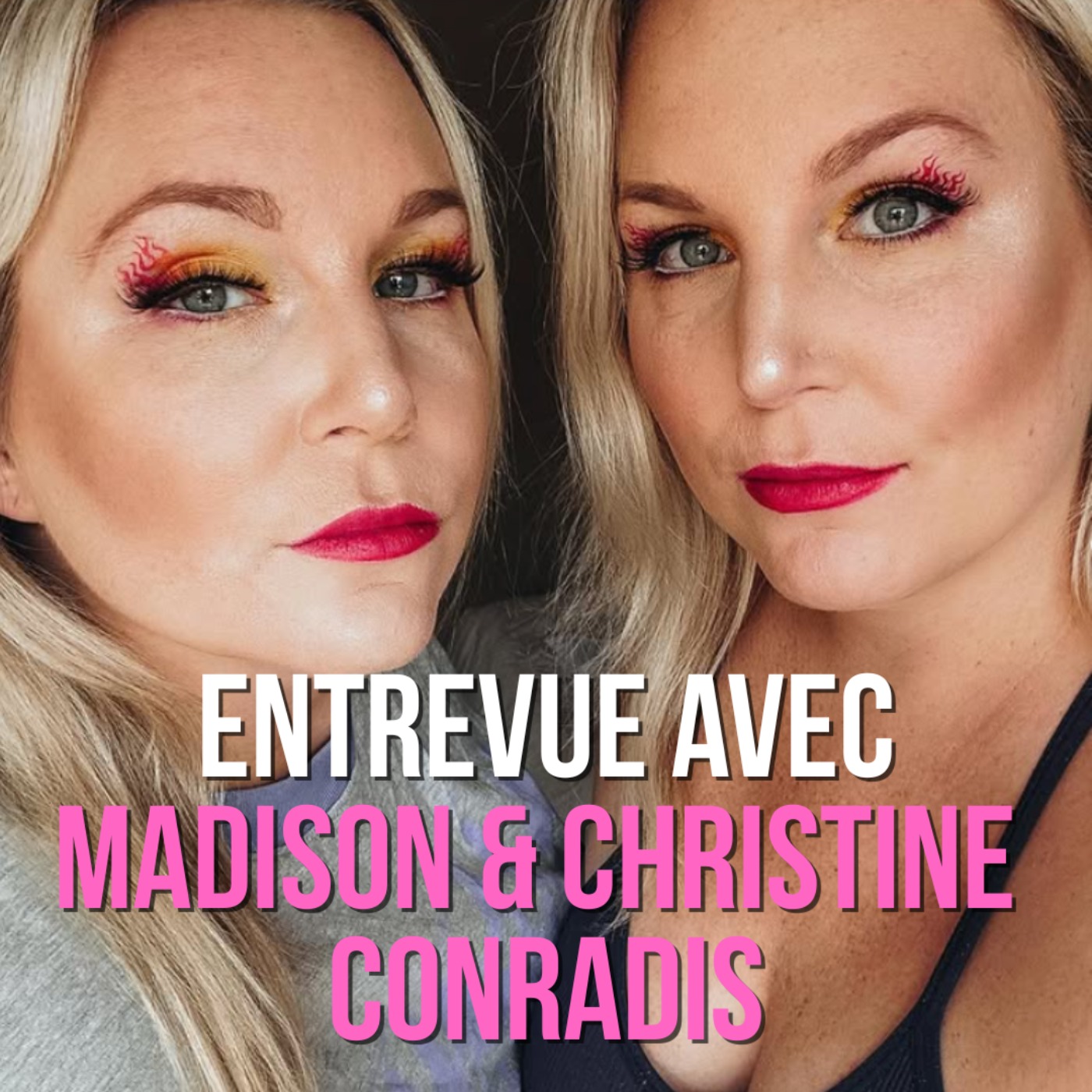
On vient tout juste de compléter une interview avec Madison et Christine Conradis.
[00:53]
Vous savez, on a fait l'épisode 129, cette saison-ci, en fait, le troisième épisode de notre saison 10,
[00:59]
sur leur cas, donc la vengeance des jumelles Conradis.
[01:04]
Veux-tu nous en dire un petit peu plus sur cette histoire-là?
[01:06]
En résumé, Seb, parce qu'on vous conseille évidemment d'aller écouter notre épisode avant d'écouter l'interview.
[01:11]
Oui, exact, parce sinon vous allez vous spoiler.
[01:12]
De toute façon, c'est tellement une histoire incroyable.
[01:15]
Je vous fais un petit recap rapide pour vous remettre dans le bain.
[01:18]
En 2010, Madison, alors qu'elle était étudiante en marketing et mannequin à temps partiel,
[01:24]
elle a participé à une photo professionnelle pour elle, seulement pour ses propres besoins.
[01:31]
En 2011, les photos supposées privées se sont retrouvées en ligne sans son consentement
[01:37]
parce qu'il y a eu un piratage du portfolio du photographe.
[01:44]
Et là, ça s'est mis à se répandre sur le web. Vous pouvez vous imaginer,
[01:49]
il y a des inconnues qui se sont mis à lui écrire, elles se sont faites harceler.
[01:53]
C'était des photos qu'on doit dire style boudoir, des photos un peu sexy,
[02:00]
mais tout de même pas des photos pornographiques, c'est tout à fait normal.
[02:03]
Non, exact, du soft érotique.
[02:05]
Mais quand même, les gens mal intentionnés réussissent, c'est toujours en en tirer quelque chose.
[02:11]
2014 à 2016, Madison, c'est là qu'elle commence à recevoir,
[02:15]
et c'est plusieurs années plus tard, des messages anonymes, des menaces,
[02:19]
et elle devient la cible d'un harceleur assez persistent.
[02:23]
2017 à 2019, avec l'aide de sa sœur jumelle, Christine,
[02:28]
qui était présente lors de l'interview, elle a entrepris une enquête,
[02:33]
je vous dis, elle a fait une job de cyber enquêteuse minutieuse
[02:38]
pour découvrir l'identité du responsable.
[02:41]
Elles ont réussi, il y a un nom qui a émergé en 2019 contre toute attente,
[02:46]
et donc 2021, l'homme plaidé coupable.
[02:51]
Pour ce cas-là, mais l'histoire ne s'arrête pas là, je vous le dis,
[02:53]
si vous ne l'avez pas écouté, c'est un cas très actuel de l'époque actuelle,
[02:59]
même si ça s'est déroulé, ça a commencé il y a 15 ans,
[03:03]
et justement, eux-mêmes, un peu comme Amendata, c'est dans les mêmes années,
[03:08]
ils ont vécu un peu le manque d'éducation des autorités
[03:12]
pour traiter le cas en tant que tel, donc je ne vous en dis pas plus.
[03:16]
Puis malgré tout, ce qui est beau de voir, c'est à quel point les sœurs,
[03:19]
ce sont deux sœurs jumelles, puis on le sent,
[03:22]
sont très attachées, sont très unies, et puis c'est vraiment le pouvoir
[03:25]
des deux sœurs entre elles qui se sont dit, on ne va pas laisser faire ça,
[03:28]
parce qu'ils se sont fait bloquer la porte lorsqu'ils sont allés voir les autorités,
[03:33]
on ne les prenait pas au sérieux, on blâmet les victimes, évidemment,
[03:37]
en disant, bien, vous aviez juste à ne pas prendre des photos.
[03:40]
Oui, exactement.
[03:41]
Donc, elles n'étaient pas prises au sérieux,
[03:43]
puis c'est elles-mêmes qui sont allées sur 4chan, sur le Dark Web,
[03:48]
qui ont analysé des photos pour repérer des logos d'écoles
[03:51]
où des photos avaient été prises pour tenter de repérer qui est ce stalker,
[03:56]
pour le savoir, est-ce que c'est quelqu'un qui est près d'eux, près d'elles,
[03:59]
près de leur famille, un membre de leur famille, qui sait?
[04:02]
Et puis, c'est en faisant leur travail un peu d'enquêteurs du Web
[04:07]
qu'elles ont réussi à carrément retracer le suspect
[04:11]
et qu'ils l'ont amené auprès des autorités.
[04:13]
Donc, c'est un gros travail de recherche qu'elles ont fait.
[04:16]
Ça nous montre justement à quel point, c'est du boulot quand même,
[04:20]
puis il faut avoir un bon mental fort, mais ça nous montre
[04:23]
à quel point c'est possible, à quelque part,
[04:26]
de survivre à une situation comme ça, puis à trouver le coupable,
[04:29]
même si ça semble très difficile,
[04:31]
puis même si on peut avoir plusieurs barrières, j'ai dit hier.
[04:34]
Donc, on les a eues en interview, en fait.
[04:36]
Madison avait remarqué l'épisode qu'on avait fait sur elle,
[04:40]
sur YouTube, et elle nous a écrit, mais elle ne parle pas français.
[04:43]
Et là, on a dit, ben pourquoi pas t'avoir en entrevue?
[04:46]
Et là, c'est là qu'elle a dit, ben pourquoi pas inviter ma soeur Christine aussi?
[04:49]
Et là, ils se sont réunis, c'était tout beau à voir.
[04:52]
Et on leur a posé des questions justement un peu sur leur processus d'enquête,
[04:56]
mais aussi sur comment elles ont vécu ça.
[04:58]
Qu'est-ce que ça fait au niveau de la confiance envers les gens autour de toi
[05:01]
quand tu te rends compte qu'il y a des photos qui proviennent sans doute
[05:05]
d'un proche, de quelqu'un qu'on connaît?
[05:08]
Qu'est-ce que ça joue sur ta confiance?
[05:09]
Est-ce que t'en viens à ne plus vouloir dater,
[05:12]
d'être en relation avec des hommes?
[05:15]
Comment tu éduques ta famille par la suite?
[05:17]
Puis comment elles ont vécu tout ça de l'intérieur?
[05:21]
Donc on leur a posé plusieurs questions autour de ça,
[05:23]
mais aussi sur comment les forces de l'ordre les ont reçues à l'époque,
[05:28]
sur comment ils ont effectué un peu leur croisement de données sur les réseaux sociaux.
[05:32]
Donc c'est très intéressant, puis ce qui est beau de voir aussi,
[05:35]
c'est que les filles maintenant rient de certaines situations.
[05:39]
Elles ont sourire, elles sont souriantes.
[05:41]
Donc malgré le fait qu'elles ont toujours des traumas, bien évidemment,
[05:45]
le processus de guérison n'est sans doute pas terminé.
[05:48]
Mais malgré tout ça, ils réussissent quand même
[05:51]
à avoir certains aspects de la situation à la légère,
[05:54]
donc elles sont passées par-dessus certains aspects de l'épreuve.
[05:58]
Ah non, c'est clair.
[05:59]
Puis je me demande si tu guéris...
[06:00]
J'ai l'impression que tu guéris jamais à 100% de ça.
[06:04]
Oui, tu dois le manager, le gérer au quotidien,
[06:08]
mais puis oui, à un moment donné, le temps passe.
[06:10]
Mais j'ai l'impression que quand même,
[06:13]
en plus avec leur mission sociale,
[06:14]
avec leur site Vigilante Twins,
[06:18]
elles sont malgré tout un peu toujours...
[06:21]
Elles nagent un peu toujours en leur même soupe,
[06:23]
d'une certaine façon.
[06:26]
Ça doit pas être simple, faut être résilient,
[06:29]
mais c'est ça, un peu comme je t'ai dit,
[06:31]
j'ai l'impression que quand tu vis ce genre de traumatisme-là,
[06:35]
ça t'habite toujours.
[06:36]
Exactement.
[06:37]
Et pour en savoir plus, on se lance tout de suite.
[06:40]
Évidemment, on a fait l'entrevue en anglais.
[06:43]
Si vous avez besoin d'aide,
[06:45]
vous pouvez écouter cette entrevue sur YouTube éventuellement
[06:49]
et activer les sous-titres,
[06:51]
les générer automatiquement.
[06:52]
Ça sera pas parfait, mais vous allez peut-être mieux comprendre.
[06:55]
Donc, on se lance tout de suite.
[06:57]
Hello, Madison et Christine.
[07:00]
We are so happy to have you here on our podcast.
[07:03]
For us, you represent a modern form of superheroes,
[07:07]
if I can say,
[07:08]
who will stand strong and never give up
[07:11]
to make justice happen.
[07:12]
So I'm sure a lot of our listeners,
[07:14]
especially women who went through this,
[07:16]
were moved by your story.
[07:18]
And I'm sure a lot of them relate with you.
[07:21]
How are you today?
[07:22]
I'm doing well, thank you.
[07:24]
Yep, we're doing good.
[07:26]
Thanks for having us on. This is great.
[07:29]
Thank you.
[07:29]
Thank you very much.
[07:30]
First question, as a heist breaker,
[07:33]
I know you guys are Swifties,
[07:36]
just as many of our listeners.
[07:37]
So how many times did you guys see the Eras Tour?
[07:43]
Four, Madison?
[07:45]
I think I had one more than you,
[07:48]
because I went with one of her friends.
[07:51]
So I think Christine saw her four times,
[07:53]
and I saw her five times.
[07:56]
Let's add in that I selflessly gave up my ticket
[07:59]
to your friend so she could go one time
[08:01]
since I'd already been.
[08:04]
So you guys are big fans.
[08:06]
Yeah, and I don't know if you guys have seen the news today,
[08:09]
because I know we're all productive members of society at work,
[08:13]
but she just bought her master's back.
[08:15]
She announced today, so that's great news for her
[08:17]
in a different arena of women
[08:20]
and being superpowers or superheroes
[08:24]
and women owning their own music and everything.
[08:27]
So that was really cool to see.
[08:28]
Oh yes, we highly respect that.
[08:31]
We haven't ever told any of the other interviews we've done,
[08:35]
but we're such Taylor Swift fans
[08:37]
that during our sentencing,
[08:41]
it was still kind of like COVID out there,
[08:43]
so we had to wear masks,
[08:45]
and we both had a different Taylor Swift quote on our masks
[08:48]
when we went into the courtroom
[08:51]
to tell our victim impact statements
[08:54]
towards the sentencing.
[08:56]
I think mine was,
[08:57]
there's nothing like a mad woman,
[08:59]
and then, oh, Christine, yours was speak now.
[09:03]
Yes.
[09:05]
Yeah, it's kind of funny,
[09:07]
because a lot of our listeners are Swifties, of course,
[09:11]
and my daughter is a big Swiftie too,
[09:14]
and it felt like,
[09:17]
I also saw your merch on your website,
[09:19]
and I really love the Vigilante era hat
[09:23]
that also feels like there's a little bit of Taylor Swift
[09:28]
in your story as well.
[09:30]
Oh, definitely.
[09:30]
That definitely came,
[09:34]
was inspired by Taylor Swift 100%.
[09:39]
It's a great inspiration.
[09:41]
Sure.
[09:43]
So yeah, let's move on to maybe more specific questions.
[09:47]
Of course, our listeners have listened to our episode
[09:50]
that we made earlier this season.
[09:53]
So Seb, we'll let you go with the first question.
[09:56]
Yes.
[09:58]
Taking us back to 2014 and 15
[10:01]
before today's AI era,
[10:05]
what went through your mind when you first start
[10:08]
to get contacted by strangers about your pictures?
[10:12]
So I'll take those questions since I was kind of the one
[10:15]
that it started with.
[10:17]
I explained it when I first found out,
[10:19]
your heart drops.
[10:20]
You don't know why someone would be trying to hurt you
[10:24]
in the way that they are.
[10:26]
And it's funny that you mentioned AI
[10:29]
because Christina and I talk about it all the time.
[10:32]
Obviously, AI has made it a lot easier
[10:34]
to even get like fake nudes of girls.
[10:38]
But even back then,
[10:39]
we noticed that people were still doing it.
[10:42]
They were just doing it at the old school Photoshop.
[10:45]
And they would be asking people like,
[10:47]
oh, I don't have nudes of XYZ girl,
[10:49]
but I can Photoshop them for you.
[10:52]
So it really is crazy to think about how AI
[10:55]
is just making it easier for these people.
[10:57]
But the thought process of how they're doing it with AI
[11:01]
has always been a thing before even AI was invented.
[11:05]
Yes.
[11:06]
Really mainstream, right?
[11:08]
Yeah, like mainstream, I guess.
[11:10]
I don't know when it was invented per se.
[11:13]
In the days and months that follows,
[11:15]
how did this experience affect you personally
[11:18]
and emotionally?
[11:19]
What toll did it take on your life?
[11:22]
I'll go first, and then Christina,
[11:23]
you can kind of pop into your experience.
[11:27]
Yeah, I mean, ultimately,
[11:28]
a lot of these questions are directed at you,
[11:31]
and I can clean up because you were the one
[11:32]
that experienced it first and probably more intense
[11:37]
than all the other victims as well.
[11:39]
You know, there was a couple victims
[11:40]
that were on the same level as you, but...
[11:43]
I mean, I kind of broke it down
[11:45]
to physically, mentally, financially draining.
[11:51]
So there's kind of three categories.
[11:54]
Physically kind of stemmed from just being overly tired
[11:58]
and nonstop being harassed through phone calls,
[12:04]
messages to where you couldn't sleep.
[12:07]
Physically also kind of turns into the mental game
[12:09]
to where I had been so mentally exhausted
[12:15]
and stuff to do anything
[12:20]
to where it also affected me physically.
[12:22]
I had all my, they call them like stress hormones.
[12:27]
All of my stress hormones were like skyrocketed.
[12:30]
Like my cortisol was through the roof,
[12:33]
my thyroid, my prolactin,
[12:36]
a bunch of like these hormones that can go awry
[12:38]
in women that stems from stress.
[12:41]
So I was having health, like physical health problems
[12:44]
from this mental distress that I was going through.
[12:48]
Obviously doesn't ever feel good to be harassed
[12:50]
or bullied or stalked in general.
[12:54]
I think when it's online and anonymous,
[12:57]
it's that next level
[12:59]
because you don't know who's hurting you, right?
[13:01]
Like when you're in school and someone's, you know,
[13:04]
bullying you and throwing your lunch at your face
[13:08]
or to really know who's trying to hurt you.
[13:11]
So I think that there's just like that extra scariness factor
[13:14]
of it to when it's someone anonymous.
[13:17]
It really messes with your head,
[13:19]
which in turn can start messing with you physically too.
[13:24]
And then I always kind of throw in
[13:27]
the financial aspect of it too,
[13:29]
because when you're that low
[13:31]
and you're doing things like that,
[13:32]
like you're obviously not your best self.
[13:35]
Like you can't be the best friend you want to be.
[13:38]
You can't be the best daughter you want to be.
[13:39]
You can't be the best employee you want to be.
[13:43]
And then on the other aspect of it,
[13:48]
he really was reaching out to my bosses,
[13:51]
my clients, different people in my work life too.
[13:55]
So that's kind of how I describe
[13:58]
the different ways that all of that affects you.
[14:03]
And then just like trust in general,
[14:05]
so like your personal life,
[14:07]
it's really hard to trust people.
[14:10]
Definitely before I anonymized him,
[14:13]
because again, it could have been anyone in the world.
[14:16]
People I knew like closely, right?
[14:19]
So the trust factor,
[14:21]
if you can't trust anyone in your entire life,
[14:23]
that takes a toll on you too.
[14:25]
So it just sucked.
[14:27]
It's the best explanation I can explain.
[14:30]
And what about you, Christine?
[14:32]
How do you think it affected you?
[14:35]
I mean, that's a pretty good characterization.
[14:39]
And kind of listening to you explain that,
[14:41]
it's almost like the modern day Pretty Little Liars, right?
[14:44]
I mean, you guys have daughters, but they're younger.
[14:47]
And this is probably like a 10-year-old show,
[14:50]
but it's kind of a similar, or Gossip Girl, right?
[14:52]
Gossip Girl and Pretty Little Liars and all that,
[14:54]
where you're constantly looking over your shoulder of like,
[14:58]
is this the person that's trying to hurt me,
[15:00]
or are they providing information to this person,
[15:03]
or who is it?
[15:04]
And I don't know if you got into this part, Madison,
[15:06]
but like your recurring nightmare,
[15:08]
so it's obviously like a psychological,
[15:11]
terrifying thing to go through,
[15:12]
of someone standing over you in the middle of the night
[15:16]
that was so real and vivid
[15:19]
that you truly would wake up and like scream
[15:22]
and slam the door and try to get away from that masked person, right?
[15:26]
And so a lot of that comes down to that person being anonymous.
[15:31]
You don't know who it is. It could literally be anyone.
[15:35]
And for me personally,
[15:37]
so I was just kind of reflecting on Madison's experience,
[15:42]
for me personally,
[15:43]
I wasn't so much involved on the new photo part for a long time.
[15:52]
My sole purpose was to help Madison for so long,
[15:56]
but that kind of struck a nerve in this person.
[15:58]
And this person would then post photos of me,
[16:02]
you know,
[16:04]
graduating law school or just pulling photos from my Facebook profile page,
[16:08]
the only thing that was, you know, public,
[16:10]
asking for people for nude photos.
[16:12]
So like that's terrifying in and of itself.
[16:15]
And then you don't think that there's anything out there of you,
[16:19]
and then you are posted later on
[16:22]
and then nothing really prepares you for that moment
[16:25]
that you see your own photos on the internet
[16:29]
and like how Madison says that your heart stops
[16:31]
or your stomach kind of like has that weird feeling
[16:34]
and there's nothing really, you can't really describe it.
[16:37]
There's nothing really that can prepare you for that.
[16:39]
Oh, it must be terrible, I'm sure.
[16:42]
And what do you do in these cases?
[16:44]
Madison, you mentioned that he was emailing your boss,
[16:48]
your coworkers, members of your family.
[16:53]
Seb and I have been hacked multiple times,
[16:55]
but we've never been cyber bullied or cyber harassed.
[16:59]
What do you do in these times?
[17:01]
Do you message back your boss and your coworkers saying,
[17:05]
hey, I'm harassed by this stalker, I have a stalker.
[17:08]
What do you do? Do you change your passwords?
[17:11]
It might be so overwhelming that you don't know where to start.
[17:14]
What are your first thoughts when it happens?
[17:19]
Yeah, especially like in the beginning,
[17:22]
my first thoughts are probably going to be different
[17:24]
than what I would do now.
[17:28]
Well, there's maturity too, right?
[17:30]
When you're in your late teens, early twenties,
[17:34]
I mean, your reaction was like,
[17:36]
oh gosh, my boss has seen my naked body.
[17:38]
I think now what we've gone through,
[17:41]
we would be more apt to be able to communicate
[17:44]
what was happening and all of that.
[17:47]
But when you're young like that,
[17:50]
I mean, it would still be embarrassing at any age,
[17:52]
but it's harder to navigate it when you're a young,
[17:55]
late teens, early adult.
[17:58]
Yeah, I agree.
[18:00]
So you're kind of a little bit more shameful at that age.
[18:03]
You kind of just try to brush it off,
[18:06]
kind of ignore the situation.
[18:08]
And other people do the same too.
[18:10]
Like some of the people that he had reached out to,
[18:13]
I didn't know until like much, much later
[18:15]
because they were like, I was just like,
[18:17]
it was an awkward situation.
[18:19]
I didn't even want to tell you that, you know,
[18:22]
someone sent me photos of you or someone was saying
[18:24]
that you were in this website or this or that.
[18:27]
So I think there's like just like a sense of shame
[18:30]
on both sides of the parties really.
[18:34]
And I think that's one I can speak for myself.
[18:36]
And I think Christine's the same way.
[18:38]
That's one of the reasons that we have been so vocal about,
[18:42]
you know, this type of crime,
[18:45]
because once society takes that shame out of the victim
[18:49]
and the people trying to help the victims,
[18:51]
that's taking the power out of the hands of the people
[18:54]
that are doing this because they eat off of that
[18:56]
because they know that someone's going to be scared
[18:59]
to, you know, ask their parents for help
[19:01]
or ask their sister or teacher or the police.
[19:07]
They've used that for their advantage
[19:10]
because they know it's such a shameful thing to go through.
[19:15]
How did it escalate from someone blackmailing you
[19:19]
to a lot of people calling and harassing you?
[19:23]
I mean, if you want me to try to take a stab at this one,
[19:25]
Madison, I mean, we both can probably equally answer this.
[19:31]
So where the photos were mostly posted
[19:33]
was a website called 4chan.
[19:35]
And it's an anonymous web board
[19:39]
where people can post things.
[19:41]
I'm sure you all know, I don't know
[19:43]
if you've had episodes for your viewers or anything.
[19:46]
And so this person, one singular person,
[19:49]
was posting these for a long time.
[19:53]
How these particular web boards work is,
[19:56]
it's not just Madison on there.
[19:58]
There's girls, underage girls and women
[20:00]
from all over the country,
[20:02]
and they classify them through area code.
[20:07]
And I'm going to make it up in area code
[20:09]
because obviously I don't want to out Madison in her location.
[20:14]
But let's say, and so in the US there's three-digit area code.
[20:16]
So let's say her area code was 475.
[20:20]
They would have a folder of photos on this website
[20:24]
and it would have 457 area code or 789 area code,
[20:29]
all these different area codes.
[20:30]
And then they would post the woman to it.
[20:33]
A lot of times, at least back then,
[20:35]
I'm sure it's probably still somewhat this way.
[20:38]
They were almost trading these women's nude photographs
[20:41]
like baseball cards or Pokemon cards.
[20:43]
I'm probably dating myself with the Pokemon card reference,
[20:46]
although it's probably back knowing Gen Z.
[20:49]
And so they would like,
[20:50]
hey, I got Maddie C from 457.
[20:52]
Do you have Josie F from 457?
[20:55]
And then they would like trade them.
[20:57]
And so that was going on in the background.
[21:00]
So then multiple other people would get her photos.
[21:03]
Some, based on our subpoena research,
[21:05]
we captured some other people
[21:06]
that were sharing her photos here and there.
[21:10]
The main perpetrator, Chris Blanacore,
[21:13]
was sharing them in immense amount of times,
[21:16]
like hundreds, if not thousands of times a day.
[21:19]
And with those posts were sometimes calls of action,
[21:23]
whether it be, hey, call her employer
[21:25]
and tell them that her photos are on the internet
[21:27]
and just share them with him.
[21:30]
He was terrorizing and harassing, we found out later,
[21:34]
at least six other girls and women.
[21:36]
And so some of them were as egregious as calls of action to harm.
[21:41]
And so he would post a photo of the girl in this case,
[21:46]
an underage family member, and say,
[21:48]
hey, this is my cousin. I want to see her raped.
[21:52]
She would post photos of Madison with her nude photograph,
[21:55]
maybe her LinkedIn profile picture,
[21:59]
her mom and dad's address, her address,
[22:01]
where she works, her phone number,
[22:04]
her social media accounts, and say,
[22:06]
hey, everyone, go harass this girl. Call her.
[22:12]
This is her contact information.
[22:15]
And so they're almost using these websites,
[22:17]
or this particular person was using this website,
[22:20]
as an anonymous army to harass one person.
[22:24]
And anybody can see these, that it's on this website.
[22:27]
And so they're going and seeing this
[22:31]
and reacting to that call of action and actually doing it.
[22:34]
So a lot of instances of people that were messaging her,
[22:37]
calling her, calling her employers
[22:39]
weren't necessarily Chris Buonacore.
[22:41]
It's random strangers that he doesn't even know
[22:43]
from the internet that are actually listening to his calls
[22:46]
of action on this anonymous web page message board
[22:50]
and taking action and doing that.
[22:52]
So he ultimately had an army of anonymous people behind him.
[22:58]
I'm always surprised to see how organized
[23:01]
these stalkers and harassers are.
[23:03]
I didn't know they were sorting the pictures
[23:06]
based on postal codes.
[23:08]
And if you met this person, this is not a rocket scientist.
[23:12]
Like not a smart human.
[23:14]
Like a prisoner he might have dropped out of,
[23:16]
like failed out of college, kind of.
[23:18]
Just not someone you would envision being good with technology.
[23:24]
So proof that, I guess, if you're motivated enough,
[23:26]
you can learn whatever.
[23:28]
But we got pretty good at navigating the dark web
[23:32]
throughout all this process.
[23:34]
But it's not as intuitive as you would think.
[23:39]
And so, yeah, it is interesting that they are pretty organized.
[23:44]
And he had a lot of time on his hands because
[23:47]
it's what I think.
[23:50]
And at this time, maybe a question for you, Christine.
[23:53]
I can imagine at this time,
[23:55]
the pictures of Madison have leaked.
[23:59]
There's people sharing different pics on this website.
[24:03]
But how did you first get involved to help your sister?
[24:07]
What did trigger you to go on a quest to help her?
[24:14]
Well, A, she's my twin sister,
[24:15]
so I would do anything to help her, right?
[24:17]
So she came to me with this problem.
[24:20]
And we talked it out.
[24:21]
And at first, we were like, OK, let's take a beat.
[24:24]
Let's pause.
[24:26]
This person just wants attention.
[24:27]
It'll fizzle out.
[24:28]
This is coming from the era of hot or not
[24:32]
and that whole era of just toxic, toxic internet talk
[24:37]
about rating females and sharing news,
[24:40]
which I am very far removed from high school.
[24:44]
So I'm sure that's even worse now.
[24:47]
But back then, it was a lot of high school,
[24:50]
junior, seniors around that age, early college.
[24:54]
We were early college into late college
[24:57]
and this was happening.
[24:58]
So we're like, OK, strategy-wise, let's just take a beat.
[25:03]
Let it kind of fizzle out.
[25:07]
And then at some point, Madison had tried to report it
[25:12]
to the police just so she could at least get a police report
[25:15]
and everything.
[25:16]
And they kind of turned her away.
[25:18]
And so that's when I kind of stepped in.
[25:20]
And at this point, I am in law school probably.
[25:24]
So I just jumped.
[25:25]
That story probably jumped like four years.
[25:28]
So this all started in undergraduate college.
[25:33]
So college, I don't know what you all call it there,
[25:36]
but our undergraduate degree.
[25:38]
And then flash forward after we're like, OK,
[25:40]
this isn't going away.
[25:41]
I'm now in law school, which is the next step
[25:44]
after undergraduate degree.
[25:46]
And so I had been taking a privacy law class.
[25:51]
And I knew for a fact that a new law was just enacted
[25:55]
at the time, 2014, 2015-ish.
[25:58]
Time frame is what we're talking about here.
[26:01]
We're in revenge porn, which we don't particularly like
[26:04]
that term.
[26:06]
They actually call it non-consensual pornography.
[26:08]
And the Florida statute was enacted.
[26:10]
And so when the police turned her away and told her
[26:12]
that wasn't a crime, I tried to compile some literature
[26:18]
for her and have her bring it into the police
[26:22]
to educate them on like, no, this is a crime.
[26:25]
And so that's kind of when I first started
[26:27]
getting involved.
[26:28]
I was also sent photos from random strangers
[26:32]
on Facebook Messenger and things like that.
[26:35]
So if she hadn't have told me, I would have
[26:37]
found out anyways.
[26:38]
Like they were sending it to me, our dad, our mom,
[26:42]
her clients, her bosses.
[26:44]
So I would have known regardless, but she had confided
[26:46]
in me to kind of brainstorm to help.
[26:49]
We are twin sisters.
[26:50]
We're very close.
[26:50]
So of course she would confide in me.
[26:52]
And of course I would want to help her.
[26:55]
Yeah, I can totally imagine.
[26:59]
And because at that time you were studying law
[27:02]
and that also became some sort of your quest
[27:05]
to have the law changed to be more proactive
[27:10]
towards cyber harassment and cyber bullying.
[27:14]
Yeah, I mean, we've always advocated for stricter laws
[27:18]
and less loopholes and things like that.
[27:21]
We're not really in the position to have an effect
[27:23]
on that much change in that regard.
[27:27]
But it was nice to see the Take It Down Act got passed
[27:31]
this year at the federal level, which is new.
[27:35]
So that's great.
[27:36]
There's some good things and some not so great things
[27:40]
in that law like any law.
[27:42]
But it's a good step in the right direction.
[27:45]
Back then, this is a decade ago when the Florida's
[27:49]
non-consensual pornography law enacted.
[27:52]
That was fairly new at that time and modern.
[27:58]
And there was not, I think now probably all 50 states
[28:01]
have it, maybe 48 or so have some sort of non-consensual
[28:06]
pornography law.
[28:07]
But back then, it was probably 50-50.
[28:10]
And there was no federal law.
[28:12]
And so our case included had to rely on cyber harassment
[28:17]
because there was no federal law to hang your cap on.
[28:22]
So we kind of had to get creative there.
[28:26]
And really, that was the US attorney and the FBI
[28:30]
who had to figure out what charges to charge him with.
[28:38]
But at the time, that's all they had.
[28:41]
So as of this year, there is both a cyber stalking law
[28:45]
that you can charge someone with, but there's also
[28:50]
the Take It Down Act, which Madison and I haven't
[28:52]
dissected the entire thing yet.
[28:54]
But it does look like it's a step in the right direction.
[28:57]
Yeah.
[28:58]
So at least we're making progress on this side.
[29:03]
Question for Madison now.
[29:04]
At some point, and it was really shocking
[29:06]
when we went through your story.
[29:09]
At some point, you learned that your ex-boyfriend
[29:13]
was sending pics to John Doe, basically.
[29:18]
And I was shocked to learn that.
[29:21]
I think our audience was shocked too.
[29:23]
But was there a pivot point or a tipping point
[29:27]
between you guys at the moment?
[29:30]
So he kind of turned his back on you.
[29:32]
So how did he go from being your boyfriend
[29:38]
to some sort of a traitor, basically?
[29:42]
Yeah.
[29:43]
So I really don't know 100% exactly
[29:48]
what was going on in his mind.
[29:51]
He told everyone, including myself,
[29:56]
that he was trying to help.
[29:58]
And this is the way that he thought he could help.
[30:01]
And that obviously makes sense to no one
[30:05]
who has any sort of sanity in their brain.
[30:09]
So in my mind, what I think is it was a slight case
[30:14]
of a stereotypical revenge form,
[30:18]
which I'm saying in quotations, because we've already said
[30:20]
we don't like love the term revenge porn.
[30:23]
And the reason I don't love the term revenge porn
[30:25]
was because it's not always revenge, right?
[30:27]
So with Chris Bonacourt, I had done nothing to that guy.
[30:31]
I never hit him on.
[30:32]
I was always nothing but nice to him
[30:35]
when I saw him with my brother-in-law.
[30:37]
So that's really the reason that revenge porn
[30:39]
just strikes a chord with me, because it's like,
[30:42]
yes, a boyfriend or a husband can get mad at someone
[30:45]
and do this for revenge,
[30:48]
but that's not 100% of the cases, right?
[30:51]
Well, and also it shifts the blame, right?
[30:53]
It's like, oh, well, she did something to deserve this.
[30:55]
And it's like, no matter what you do,
[30:59]
that's still not like an eye for an eye is not a thing.
[31:01]
Like, oh, she broke up with me.
[31:02]
Let me share her revenge porn.
[31:05]
Even if it was something more egregious than that,
[31:09]
that doesn't make it right.
[31:11]
And so we think that the term revenge porn
[31:14]
kind of, again, like society,
[31:18]
shifts the blame to the victim
[31:20]
versus where it should be with the perpetrator.
[31:23]
Yeah, exactly.
[31:25]
But so like in this instance with my ex-boyfriend,
[31:29]
I really do think it was a little bit of, you know,
[31:32]
that I was kind of pulling away.
[31:34]
We had a very like up and down relationship as it was.
[31:37]
It wasn't the healthiest relationship I've ever been in,
[31:42]
probably the least healthiest.
[31:44]
So I think like I was kind of on my way of pulling back.
[31:48]
I obviously had my own issues I was dealing with mentally
[31:51]
and physically because of everything going on with me.
[31:54]
But it was just another situation I needed to pull back from.
[31:59]
So I do truly believe that it was like a little bit
[32:01]
of revenge on his side.
[32:04]
He just never admitted it
[32:05]
or would probably still never admit it.
[32:08]
He was named on our civil case
[32:12]
that we had to do essentially to get like subpoena power
[32:17]
and to de-anonymize Christopher Bonacourt.
[32:21]
But he wasn't named on any of the criminal charges.
[32:26]
I'm not entirely sure why the government
[32:30]
and FBI didn't go that route.
[32:33]
They're probably just trying to get the bigger fish, right?
[32:37]
And then I know I have emails from the Maine police
[32:39]
that we reported to where he lives in Maine.
[32:42]
And they said their law said that there had to be an intent to harm.
[32:46]
And he stated that he was trying to help,
[32:48]
so the intent wasn't there.
[32:51]
Yeah, so that's kind of what I was about to say.
[32:52]
Like I know that certain laws have like the intent to harm
[32:57]
is like the loophole with some of the states.
[32:59]
Including Florida right now, yeah.
[33:01]
Yeah, so there's like a few loopholes that people can, you know,
[33:06]
try to get out of situations in the criminal aspect of it.
[33:11]
But I'm sure he's not very happy with the civil side of things either.
[33:16]
I hope.
[33:18]
But yeah, Karma will take care of him, I'm sure.
[33:22]
Just to do another Taylor Swift pun here.
[33:26]
Karma is my ex-boyfriend.
[33:28]
Oh yeah.
[33:32]
Okay.
[33:34]
When you first tell law enforcement about online harassment,
[33:38]
how are you perceived at the police station?
[33:40]
Do you feel the authorities understood the seriousness
[33:44]
of the situation at this time?
[33:47]
No.
[33:48]
And like this question is like,
[33:51]
I could go on and on and on with this question.
[33:55]
It sucks.
[33:55]
So you have to also think that,
[33:57]
I would like to think that it's better nowadays.
[34:00]
Like there's been like the Me Too movement.
[34:02]
Like there's like society seems to be like up and coming
[34:04]
and respecting women and their decisions in life and whatnot.
[34:09]
And their, you know, privacy and whatnot.
[34:11]
But back then, say that was 10, 13 years ago,
[34:17]
they did not respect me coming in.
[34:20]
And it was just the typical victim blaming.
[34:23]
But it was like, well, this isn't a crime.
[34:29]
Like why do they even have the photos?
[34:32]
Yeah, we can't help you with this.
[34:34]
No, you can't even write a report.
[34:35]
Like blah, blah, blah, et cetera, et cetera.
[34:37]
It was not fun to report that.
[34:40]
And it's again a shameful thing to talk about report, et cetera.
[34:45]
So that's like one of the main things I can complain about.
[34:48]
This whole situation is how unhelpful the police were
[34:52]
in the beginning.
[34:53]
Fast forward, I have everything good to say about the FBI.
[34:57]
But you have to get to there before you get help from them.
[35:01]
So like the bottom of the barrel.
[35:02]
I can't listen to the FBI and say like, what up, come help me.
[35:05]
Yeah.
[35:07]
So I kind of have a lot of negative things to say about
[35:11]
my local police station and how they handled it.
[35:13]
And I think a lot of people go through that.
[35:19]
And like areas all around the world, not just the U.S.
[35:24]
And it's just scary to think about how many times I had to go in there
[35:28]
and not get help.
[35:31]
It's really sad to think about, too, because it's like,
[35:33]
I just know how many people that don't have the resources
[35:35]
to keep heading back to get, you know,
[35:38]
any sort of respect in that room.
[35:40]
It just makes me sad.
[35:41]
Yeah, going back to your comment about being a decade ago,
[35:44]
like your initial experience was over a decade ago.
[35:46]
Well, probably closer to 15, 20 years ago at this point.
[35:52]
But our last experience was not that long ago, Madison.
[35:55]
So like, yes, we'd like to believe that it's getting better.
[35:57]
I'm sure some places are.
[36:00]
And, you know, there's good police stations
[36:04]
and less good police stations all over and employees and people.
[36:08]
Right.
[36:09]
But when we went in to all of our police stations,
[36:14]
that was maybe six, seven years ago.
[36:17]
That wasn't that long ago.
[36:19]
And so what we all did was I compiled like a little packet
[36:23]
for everyone that had, you know,
[36:26]
factually what was going on with each victim.
[36:28]
And then a list of possible laws that this person was breaking
[36:33]
based on, you know, New York, where some of them lived,
[36:37]
and Florida, where some of them lived.
[36:39]
And then I looked at all like the truly like county, city,
[36:43]
local laws as well, as well as federal.
[36:46]
So like, for example, cyber stalking was in my list
[36:49]
and packet to the police officers.
[36:52]
And when we finally looped in all the other girls that we found
[36:55]
out that he was harassing, we like in a kind of like
[37:01]
a sign of unity, like went to our police stations all
[37:04]
in the same day just to file police reports.
[37:06]
And only two came back with police reports.
[37:10]
And so some of the exact quotes that I got,
[37:13]
again, I'm a young lawyer at this point too, right?
[37:16]
Dressed in my lawyer costume, right?
[37:18]
Like I'm going in there, I look the part, right?
[37:22]
And so they still told me at the front desk
[37:24]
that I couldn't file a police report.
[37:26]
And I just wasn't going to leave until I could at least
[37:29]
fill out the form and get it to a detective, right?
[37:32]
And so I was one of the only ones that actually got
[37:36]
a police report that day.
[37:38]
And some of the things that I heard,
[37:41]
which are some of the same things Madison heard
[37:43]
from the front desk input officer was like,
[37:47]
well, how did they get the photos?
[37:49]
This isn't a crime.
[37:50]
Well, maybe it's a misdemeanor,
[37:52]
but a jury's never going to understand this.
[37:55]
These are all the things that they're saying to us
[37:56]
to persuade us not to even file a police report.
[38:00]
And so ultimately, I got a police report,
[38:06]
filled it out, it got sent to the detective
[38:09]
who ultimately decided, yeah, this is a crime
[38:12]
and we're not really capable of handling this.
[38:14]
This seems like something the FBI should take.
[38:16]
And so my police station forwarded it to the FBI.
[38:19]
Without that detective doing that,
[38:22]
who knows where we are today?
[38:24]
Like we might have never gone to the FBI.
[38:27]
Yeah, because it looks like they always reduce the crime
[38:32]
at, okay, there was some nude picture shared somewhere
[38:36]
or a nude picture was leaked.
[38:37]
Oh, the picture is not terrible.
[38:39]
So there's not a lot of damages,
[38:40]
but it's like they don't care about
[38:43]
all of the collateral damages that it does around you,
[38:46]
like the emails to your boss, to your family.
[38:49]
You probably had to change accounts
[38:51]
to remove social media accounts.
[38:54]
I don't know everything that you did,
[38:57]
but it goes.
[38:58]
Changed phone numbers, all of it, yeah.
[39:00]
And all of that was included in the packet
[39:03]
that all six of us brought to the police station.
[39:05]
And I had, you know, by girl or woman,
[39:08]
like screenshots of some of it,
[39:10]
you know, the more egregious things, obviously,
[39:12]
because she posted Madison hundreds of times a day.
[39:15]
But I made it very easily digestible
[39:18]
for a normal person to be able to flip through
[39:21]
and be like, man, this is fucked up.
[39:22]
We should do something about this.
[39:24]
And they wouldn't do anything.
[39:26]
And so Madison had to,
[39:27]
Madison didn't even get her police report filed.
[39:29]
She had to lean on her personal political connections,
[39:32]
being a very well respected business partner
[39:35]
in the community,
[39:36]
and call the mayor of the city,
[39:39]
who used to be the police chief
[39:40]
to get a police report filed.
[39:42]
The girls up in New York, I like Googled around,
[39:45]
saw that there was a politician up there
[39:46]
that was really, really trying to advocate
[39:50]
for non-consensual pornography
[39:52]
and cyber harassment local laws
[39:54]
reached out to his office.
[39:55]
He personally walked the two girls in New York
[39:57]
to the police station.
[39:59]
So we're pulling on connections and knowledge
[40:01]
that a lot of people don't have.
[40:04]
They don't have those resources.
[40:05]
They don't know that that's an option.
[40:08]
And so it's just kind of an illustration
[40:10]
of how being persistent is obviously key,
[40:14]
but some of it's who you know,
[40:16]
and that's messed up.
[40:18]
And at the time that you didn't know
[40:20]
who was the stalker,
[40:22]
once you checked out the photographer
[40:24]
from the suspect list,
[40:26]
because at first, I guess he's the first suspect,
[40:29]
but did you start thinking
[40:31]
that everyone around you was a suspect?
[40:33]
Did you lose trust to members of your families
[40:37]
or friends?
[40:39]
Did you try to suspect everyone around you?
[40:41]
It must be a very paranoid situation.
[40:46]
Yeah, I mean, we definitely did.
[40:48]
I was like, Dana, Christine's husband,
[40:51]
jokes with my husband, Bryce, all the time.
[40:54]
Yeah, he was on the suspect list for a while.
[40:56]
People we still hang out with.
[40:59]
But that's the thing.
[41:00]
It really is so scary.
[41:02]
That was in my victim impact statement
[41:04]
to the judges in the criminal case.
[41:08]
You don't understand how scary it is.
[41:11]
Literally for years,
[41:12]
the only person I could trust in the entire world
[41:15]
was my twin sister.
[41:17]
Obviously, they're like my mom and dad in there, too.
[41:20]
But other than that,
[41:23]
it literally could have been anyone,
[41:26]
including good friends,
[41:27]
good friends' boyfriends,
[41:28]
good friends' parents.
[41:30]
The reception is at your doctor's office.
[41:33]
It literally could have been anyone.
[41:35]
And that's what was so frightening.
[41:38]
You really do get a lot of paranoia on that.
[41:43]
So it really was so relieving
[41:46]
when we de-anonymized him
[41:48]
because we at least had a picture of his face
[41:53]
with the crime, right?
[41:54]
And it was a little less scary
[41:55]
and he could start trying to trust people a little bit more.
[41:59]
I'm really impressed that the way you cross data
[42:02]
from your Snapchat story to narrow down
[42:05]
who had viewed it
[42:07]
then matched the stalker kick handles
[42:10]
and even his quirky punctuation,
[42:12]
linking all that to others' victim
[42:15]
is a pretty amazing web-suit reflex.
[42:19]
I'm so impressed about that.
[42:21]
How did you pull those clues together
[42:23]
and did you feel you were about to catch him right then?
[42:27]
Yeah, at some point, we knew who he was and had...
[42:31]
Well, first we had a good idea
[42:32]
and then we knew who he was.
[42:34]
But you still needed those subpoenas
[42:35]
to confirm it from a legal perspective, right?
[42:38]
But what was interesting was
[42:40]
once we got better at navigating
[42:43]
4chan and some of these other archive sites
[42:46]
and other what we call dark web sites,
[42:51]
we started noticing that he was utilizing, like you said,
[42:56]
certain weird vernacular,
[42:57]
like using dot space, dot space, dot space
[43:00]
instead of dot dot dot like a normal person would use.
[43:04]
He was dropping kick,
[43:06]
like kick, K-I-K, the anonymous messaging service.
[43:10]
Hey, I got photos of Madison C kick me at
[43:15]
and inserting a couple to several kick usernames.
[43:20]
And so then we were getting good at tracking those kick usernames
[43:22]
that he was posting in these anonymous webpages
[43:25]
to then see what else he was posting.
[43:28]
And so we would see pictures of his backyard
[43:31]
that he would say things like,
[43:34]
it's snowing out, should I go run outside naked?
[43:38]
He would post pictures of his own private parts
[43:42]
with, and I don't even know what the verbiage was with it,
[43:46]
but with some sort of fetish or call to action or question,
[43:51]
he would be posting other women.
[43:53]
There was one woman in particular that he was very obsessed with,
[43:57]
but there was probably six other girls and women.
[44:01]
And so we kind of started just tracking all of that
[44:03]
and seeing, OK, who else is he posting?
[44:06]
What else is he posting?
[44:07]
OK, he's up north, it's snowing.
[44:09]
We're in Florida.
[44:10]
Most of his victims are in New York or Florida.
[44:13]
Ultimately, one of the biggest clues that linked him
[44:19]
to who it was to de-anonymize him
[44:22]
from a social evidence perspective, not the legal subpoena way,
[44:26]
was he was posting this young girl in a school
[44:30]
uniform.
[44:32]
And so my husband was like, OK, let's zoom in on the logo
[44:35]
on the school and sharpen it.
[44:37]
And so he went, again, in Photoshop back then.
[44:39]
There was no way I'd help you with this.
[44:42]
And he zoomed into the school uniform and sharpened it.
[44:47]
And we noticed that it was a school in Florida,
[44:53]
in a specific city in Florida.
[44:54]
And so if we could figure that out,
[44:56]
that this 15-year-old girl that he has calls of action
[44:58]
to rape her on this website, we figured out who she was,
[45:02]
where she lived, found her mom on Facebook.
[45:05]
We did all that.
[45:06]
So we can only imagine what someone with bad intentions
[45:09]
could do.
[45:11]
And so we realized that that was a family member of his.
[45:14]
And so that was a big clue.
[45:16]
And all this was happening at the same time.
[45:18]
And so we figured out, at one point,
[45:20]
we thought it was his, at the very initial stage,
[45:23]
we thought it was his brother, because he has a brother
[45:25]
around the same age,
[45:27]
until we narrowed it down even further
[45:28]
and realized it was Chris Blanacore.
[45:31]
Yeah, we basically had a murder board,
[45:33]
how you see on murders in the building
[45:36]
or different CSI shows and stuff.
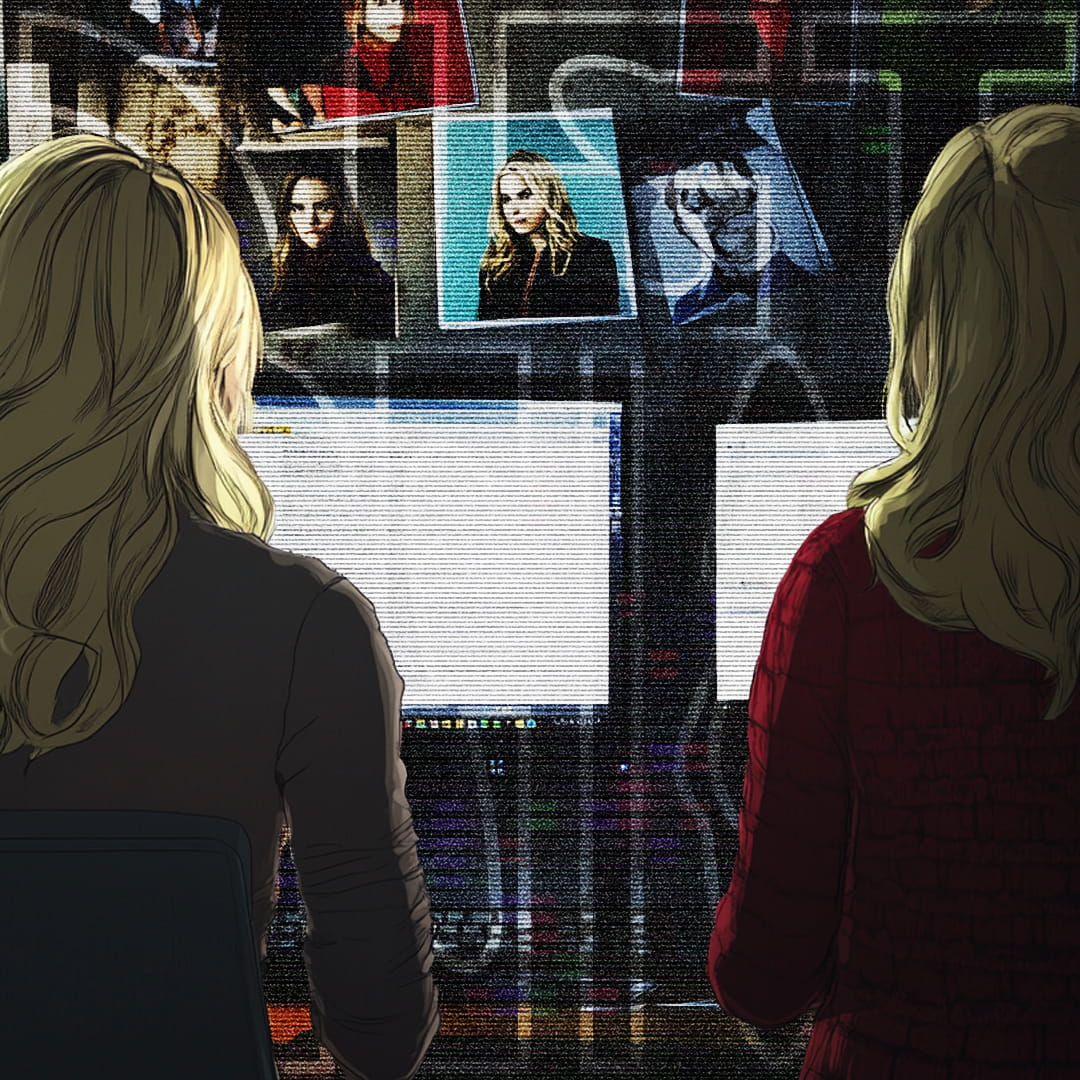
[45:40]
We like to joke that we had this huge board
[45:43]
with strings coming along and stuff.
[45:46]
It really was a virtual board.
[45:48]
But it's cool to envision us having a room
[45:50]
with pins and strings and stuff.
[45:56]
But you did a really good job in cyber investigation.
[46:01]
Yeah, those are real techniques used by investigators.
[46:05]
I mean, looking at zooming at a uniform
[46:07]
or trying to cross data from Snapchat to Kik.
[46:11]
Yeah, it was very impressive.
[46:13]
And you were using basically free tools
[46:15]
that are available to everybody to do that.
[46:19]
Our US attorney and FBI agents loved us.
[46:22]
They were like, you're helping us. Thank you.
[46:25]
Yes, they have some powers that we don't have.
[46:28]
And as we just mentioned,
[46:30]
what was your reaction when you learned
[46:33]
that the stalker Christopher was someone you knew?
[46:40]
So I think we both had a feeling
[46:41]
it was someone we knew like loosely.
[46:44]
Just because, again, like,
[46:46]
I don't think what he did was right for anyone.
[46:50]
But it's just weirdly,
[46:52]
you do associate someone like an ex-best friend,
[46:55]
an ex-boyfriend or whatnot.
[46:57]
But it's like, why would someone just do it
[46:58]
to a random stranger?
[47:00]
So I think in the back of our minds,
[47:03]
which Christine, you can agree or not,
[47:04]
I think we assumed that they at least knew of us
[47:08]
within passing, right?
[47:10]
Yeah, for sure.
[47:10]
But also remember earlier when we were chatting about them
[47:14]
treating women like trading cards or Pokemon cards.
[47:17]
In our wide sweep of subpoenas,
[47:21]
so fast forward when we filed our civil lawsuit
[47:24]
to get subpoenas to try to de-anonymize this person,
[47:28]
we were casting a wide net.
[47:29]
And we did catch some people that Madison had no idea
[47:32]
who they were at all.
[47:35]
That we're posting, yeah.
[47:36]
That makes sense, too.
[47:39]
I don't know.
[47:40]
I think just in the back of my mind,
[47:42]
I feel like we both knew that we at least...
[47:44]
To the extent that that person was posting you,
[47:47]
there had to have been a personal connection
[47:50]
or someone who at least knew of you
[47:52]
and was infatuated with you
[47:54]
or hated you for some reason, who knows.
[47:57]
But there had to have been...
[48:00]
It was too often with the amount of time
[48:03]
this person was putting forth into that.
[48:06]
Yeah, I agree.
[48:07]
So I don't think...
[48:09]
Obviously we didn't know who it was
[48:10]
because we were trying to de-anonymize him
[48:13]
for so long.
[48:14]
But once we actually did our little breadcrumb map
[48:19]
and realized it was him and then did the subpoenas
[48:22]
to actually legally show that it was him,
[48:26]
I don't think any of us were surprised at who it was.
[48:30]
And it was almost like,
[48:34]
yeah, he's a perfect suspect for this.
[48:36]
Why didn't we think of him sooner, right?
[48:38]
I think the initial reaction was shock
[48:41]
and then relief of who we knew it was,
[48:45]
shock and a sense of,
[48:47]
oh my gosh, we now know who this person was.
[48:50]
But it's almost like when people...
[48:51]
You see a mass murderer on TV
[48:54]
and whatever photo they use,
[48:56]
it always makes them look creepy or bad.
[48:59]
No one's ever like,
[49:00]
wow, that person lit up a room.
[49:03]
And so no one was going to say that
[49:04]
about this person either.
[49:06]
So once we knew who it was,
[49:08]
we were like, yeah, kind of makes sense.
[49:09]
Now that he's serving a 15-year federal sentence,
[49:15]
are you happy with the outcome?
[49:17]
Because it's hard to know.
[49:19]
It took so many years of your life
[49:22]
and also Christine's life as well.
[49:26]
How do you feel about the outcome?
[49:27]
How do you feel about this sentencing?
[49:31]
I think we're happy with the outcome.
[49:34]
I know, I mean, the lesson here
[49:35]
is never read the comments on any article
[49:37]
or any podcast or anything.
[49:38]
But I know some people have outrage of,
[49:41]
oh my God, 15 years,
[49:43]
like, murderers don't even get that
[49:44]
and rapists don't even get that.
[49:46]
But if you boil it down,
[49:47]
there were six victims
[49:48]
and what the judge did was
[49:51]
essentially calculated it out
[49:53]
for like three to four years per victim
[49:55]
that he even knows about, right?
[49:57]
And so we were happy with it.
[50:03]
What other people also don't know?
[50:04]
People love to pretend that
[50:07]
they're experts from listening
[50:09]
to one hour podcast
[50:11]
or reading one page summary article on it.
[50:15]
Yeah, this was over a decade of our life.
[50:17]
We put blood, sweat, tears,
[50:20]
thousands and thousands of dollars even.
[50:22]
Like, Madison stated health issues,
[50:25]
not sleeping,
[50:27]
terrifying dreams, all of this.
[50:29]
And so to us, it doesn't seem like too much,
[50:32]
like a lot of people say.
[50:33]
It seems like it's...
[50:36]
I think for people who have family members
[50:38]
raped or murdered,
[50:40]
whose assaulters don't get that much time,
[50:43]
that is a takeaway from the fact
[50:44]
that this guy should get that much time too.
[50:47]
He called to harm a 15-year-old girl
[50:50]
and have her raped, knowing,
[50:52]
and his argument in court was,
[50:54]
it was all fantasy.
[50:56]
It was just make-believe.
[50:57]
But you saw your calls of harm
[51:00]
to call Madison's boss
[51:03]
and report that these photos were on there.
[51:04]
You saw that come to fruition.
[51:06]
You saw your anonymous army
[51:08]
take your calls of action and carry them out.
[51:11]
It was only a matter of time
[51:12]
before someone got physically assaulted,
[51:16]
raped, murdered.
[51:17]
Like, this person was not going to stop.
[51:20]
Yeah, that's exactly what I was thinking.
[51:23]
I was like, yeah,
[51:24]
but maybe he wouldn't have been stopped.
[51:28]
Would he have escalated his game?
[51:31]
He wouldn't have,
[51:32]
because as we found out once,
[51:34]
again, going through all the names
[51:36]
and tying them back together,
[51:38]
we reached out to the other victims,
[51:40]
and two of the other victims
[51:41]
had previously figured out it was him,
[51:44]
didn't know about the rest of everybody else
[51:46]
because they weren't on the dark web like we were,
[51:48]
and so they had previously called him out,
[51:51]
talked to his dad and brother and family,
[51:54]
and they said, we're going to get him help,
[51:55]
he's going to stop.
[51:57]
The dad at one point told one of the victims,
[51:59]
good luck reporting this,
[52:01]
no one's going to care,
[52:02]
and so two of the six victims
[52:05]
had reached out to his family
[52:06]
and him to stop,
[52:08]
and it might have stopped for a month or two,
[52:11]
and then he started to write back up,
[52:13]
and so one of the victims
[52:14]
actually has extreme guilt from that
[52:17]
because she's like,
[52:18]
I didn't report it to the police at the time
[52:21]
because his dad assured me
[52:23]
that he was going to handle it
[52:25]
and this wasn't going to happen again,
[52:26]
and then she found out later
[52:28]
that he was posting a 15-year-old family member
[52:33]
with those calls of action to harm
[52:35]
and harassing Madison and harassing an ex-girlfriend
[52:37]
and harassing a current fiancé,
[52:40]
and so some of those other victims
[52:42]
who could have,
[52:44]
I hate to say could have stopped it,
[52:46]
that's probably not a good word,
[52:48]
but who had discovered it previously
[52:51]
were told by an adult they trusted
[52:53]
that it was going to end, and it didn't,
[52:54]
and so this was really the only way for it to end.
[52:57]
Oh yeah, and at the same time,
[52:59]
I don't think that the sentence is too much.
[53:01]
I mean, 15 years, of course,
[53:03]
if we start to compare,
[53:06]
we'll be angry because,
[53:07]
as you mentioned,
[53:08]
some rapists never go to jail,
[53:11]
so of course we can be frustrated about that,
[53:14]
but at the same time,
[53:15]
I think it sends pretty strong signals
[53:18]
to all the other people
[53:20]
trying to do the same type
[53:23]
of blackmailing and stalking,
[53:25]
because it's a real issue in schools right now,
[53:30]
and at the same time,
[53:30]
I think it's a good thing
[53:33]
that they had this big sentencing for him,
[53:37]
even if we compare,
[53:40]
we can be sad.
[53:42]
Yeah, for sure.
[53:43]
Two things can be true, right?
[53:45]
One, he could deserve 15 years,
[53:47]
and two, we also agree that rapists and murderers
[53:52]
could get at least that amount of time,
[53:54]
probably more, right?
[53:55]
Two things can be true.
[53:57]
What was the moment that made you decide
[53:59]
to create the excellent website VigilanteTwins.com?
[54:05]
Was it after Christopher's arrest and conviction?
[54:09]
Yeah, so it was definitely after the arrest
[54:11]
and conviction,
[54:12]
and even after that,
[54:15]
we were kind of laying low,
[54:16]
but the Washington Post article came out,
[54:21]
and we were just getting an influx of people
[54:24]
asking for help,
[54:25]
like hundreds of messages,
[54:28]
so Christine and I talked about it.
[54:29]
I wish we had the resources and time
[54:32]
to make that site way better,
[54:34]
but one of the first things we put up on there
[54:36]
was the DMCA form,
[54:38]
because that's the number one tool
[54:40]
that helped us taking down our images,
[54:44]
and so that's a lot of the first things
[54:46]
that we were telling people in our DMs,
[54:48]
like, hey, before you even think about
[54:51]
criminal or civil charges,
[54:53]
let's get these photos taken down.
[54:56]
So we were constantly having to email
[54:58]
and DM people this form,
[55:00]
so I was like, hey, let's just make a website
[55:03]
and throw this form up
[55:04]
for people to be able to use it,
[55:06]
because it really is a great resource
[55:07]
to at least start the process of gaining
[55:11]
really your rights back,
[55:13]
and so right now,
[55:15]
the main thing that people go there for
[55:17]
is obviously the DMCA.
[55:19]
We'd like to add more resources to it
[55:21]
and whatnot,
[55:21]
but yeah, that was basically the reason for it,
[55:24]
because we just saw so many people
[55:25]
needing help and resources,
[55:27]
and there's not that much out there.
[55:29]
There are a few organizations
[55:30]
that have resources.
[55:32]
Obviously, we have the funds
[55:33]
and resources to hire a private attorney
[55:36]
and all that.
[55:37]
That is awesome,
[55:39]
but some people are either scared
[55:42]
or ashamed in not telling people
[55:44]
or don't have the resources, right?
[55:47]
So we wanted a little bit of free resources
[55:49]
for people.
[55:51]
And what did that step represent for you?
[55:53]
Was it about healing, advocacy,
[55:55]
or even taking back your voice publicly?
[55:59]
So I think that during this whole process,
[56:03]
if you notice,
[56:04]
we are using the other victims very generally.
[56:07]
We're not saying their names.
[56:08]
We're not describing them enough
[56:10]
to where people can go and find them,
[56:12]
and that's because in the criminal case,
[56:14]
their identities are protected.
[56:15]
In the US, if you're a victim of a crime,
[56:19]
you have the right to be anonymous, right?
[56:20]
We don't have that option.
[56:22]
We had to file...
[56:23]
It was our choice,
[56:24]
so having to do something is dramatic,
[56:26]
but we chose to give up our anonymous...
[56:31]
Anonymity, I can never say that word.
[56:33]
We chose to file the civil lawsuit.
[56:37]
We initially attempted to file it anonymously
[56:41]
through the court.
[56:42]
The court denied our request to do that
[56:44]
and basically said,
[56:45]
if you want to file this lawsuit,
[56:48]
you need to use your real names.
[56:49]
And at that point,
[56:50]
we were at this juncture of like,
[56:53]
okay, well, once our real names are out there,
[56:55]
the media comes out of the woodworks,
[56:58]
we'll just find that's their job.
[57:00]
If you Google our names, you'll see it,
[57:02]
all of that.
[57:03]
And so at that point,
[57:04]
it was like, okay, stay silent
[57:05]
and maybe never know who this person is
[57:07]
because law enforcement's not helping us
[57:09]
and we need to be able to pull subpoenas
[57:12]
or full send, let's just use our names
[57:16]
and find out who this motherfucker is, right?
[57:19]
And so we talked about it
[57:21]
and we're like, okay, let's go for it.
[57:24]
And so at that point,
[57:25]
it's like we have no reason not to speak out.
[57:29]
And so Madison made a good point earlier on
[57:33]
where a lot of this is shameful.
[57:35]
Like if you're looking for a new job,
[57:36]
you don't want that to be at the top
[57:37]
of your resume, right?
[57:38]
Like when someone Googles you,
[57:39]
and that's what people do nowadays.
[57:42]
And so we kind of made that decision back then.
[57:45]
And then as a media,
[57:47]
first with the Senate saying the FBI
[57:49]
puts out a press release.
[57:51]
Again, it's all initials, it's all anonymous,
[57:53]
but people are smart,
[57:54]
they can look at the civil case,
[57:55]
they find our names, they contact us.
[57:58]
And so we have no reason not,
[58:02]
we can't hide it.
[58:03]
And so we feel like it's almost like our duty
[58:06]
to speak out about it,
[58:07]
where it maybe becomes less shameful for other people.
[58:11]
Yeah, everything happens for a reason,
[58:12]
sometimes we say.
[58:14]
Yeah, exactly.
[58:15]
If we would have been granted that anonymity,
[58:20]
if we would have been granted the ability
[58:22]
to be anonymous to that civil lawsuit,
[58:26]
we might not have been compelled to speak out, right?
[58:30]
Yeah, it would have been a different conversation, right?
[58:32]
Because we're protected right now.
[58:35]
Yeah.
[58:36]
So again, there's like a danger
[58:38]
and even just doing an article or a podcast.
[58:42]
And again, it sounds dramatic,
[58:44]
but the danger is there's still people who do this for fun.
[58:48]
And so to them, we're bad,
[58:52]
like we got a good result,
[58:53]
we're teaching other women to fight back.
[58:54]
They don't want that.
[58:55]
They want us to be sit here, quiet, be scared,
[58:58]
so they can keep doing what they're doing
[59:00]
behind the scenes in the dark web, right?
[59:02]
And so it would be really easy for other random people
[59:06]
to try to attack us for speaking out even,
[59:11]
which is not going to happen yet,
[59:12]
but it's an option.
[59:15]
Totally understandable.
[59:15]
I'm glad you think about it and talk about it.
[59:17]
I think 15 years scares people off a little bit.
[59:20]
Yeah.
[59:21]
With everything that you went through,
[59:24]
how do you educate your children, nieces, friends,
[59:28]
about their use of social media or content sharing?
[59:32]
I'm going to give this one to Christine
[59:34]
since she's the mom with the daughter,
[59:35]
but obviously I have a cute little niece.
[59:39]
So this is always...
[59:41]
Well, okay, so my daughter is two,
[59:42]
so I don't share advice with her yet.
[59:46]
But I mean, there will be a day in which I will have two,
[59:50]
and that's going to be a tough conversation in general.
[59:53]
I know a lot of my friends that have children
[59:58]
especially in this day and age, man,
[59:59]
we were in the very, very beginning of social media.
[01:00:03]
I think we were one of the first generations
[01:00:05]
in high school to get Facebook.
[01:00:06]
And so we're the product of that very early on,
[01:00:11]
uncensored, where we would drop in albums
[01:00:14]
full of photos partying on a Friday night,
[01:00:16]
which was insane to think about now, right?
[01:00:18]
Yes.
[01:00:19]
But that's what kids are doing and sharing nowadays, right?
[01:00:24]
And so that's something that I'm going to have to...
[01:00:29]
I'm going to have to have that conversation with her,
[01:00:32]
but I'm very cognizant of the general advice
[01:00:40]
from law enforcement.
[01:00:42]
The FBI has a campaign out about this.
[01:00:44]
I'm sure most of local law enforcement does.
[01:00:47]
I'm sure schools do about don't share photos, right?
[01:00:51]
And that to me is great advice
[01:00:53]
for someone under the age of 18, right?
[01:00:56]
Yes.
[01:00:57]
But again, I think it goes back
[01:00:59]
to shifting the blame to the victim, right?
[01:01:03]
Exactly.
[01:01:03]
So I'm probably going to struggle with that
[01:01:06]
as my daughter gets older,
[01:01:08]
and that's really the only young female
[01:01:09]
in my life at this point.
[01:01:11]
So luckily I haven't really had to
[01:01:14]
have that conversation yet,
[01:01:16]
and I'm dreading it,
[01:01:18]
but it's going to have to happen.
[01:01:20]
Yes, for sure.
[01:01:21]
And since this incredible story,
[01:01:24]
you guys decided to still be present on social media
[01:01:28]
and also share parts of your private lives
[01:01:31]
with your family.
[01:01:33]
I was actually pretty surprised
[01:01:35]
to find you guys on Instagram.
[01:01:36]
I was like, I will never be able
[01:01:38]
to find the Conradis sisters.
[01:01:42]
They might be absent from every channel,
[01:01:45]
but no, you are there,
[01:01:47]
and I was happy to find you there,
[01:01:49]
but is it a way to get your identity back
[01:01:53]
or to empower yourselves back?
[01:01:56]
Because you could have gone totally dark
[01:01:58]
and quit all social channels
[01:02:00]
since everything that you went through.
[01:02:03]
Yeah, and we did for a while.
[01:02:06]
Same time.
[01:02:07]
So we changed our phone numbers.
[01:02:11]
I took down even my LinkedIn, for example,
[01:02:14]
which is a good tool to network
[01:02:16]
and get information for career-related things.
[01:02:20]
And again, as a young professional,
[01:02:23]
that was hard,
[01:02:24]
but you don't want this anonymous person
[01:02:25]
to know where you work
[01:02:26]
and know what your professional contacts are
[01:02:29]
and things like that.
[01:02:30]
It was to the point where,
[01:02:33]
with attorneys,
[01:02:34]
you can just blow up
[01:02:36]
attorneys through their license.
[01:02:38]
I had that changed.
[01:02:41]
It didn't say where I worked.
[01:02:42]
It didn't say,
[01:02:43]
which is not good, right?
[01:02:46]
And so we shut down all of our social media.
[01:02:52]
We changed our phone numbers.
[01:02:53]
We made it very difficult to find us for a while.
[01:02:57]
But I think part of that is
[01:02:58]
living your life,
[01:02:59]
getting your identity back.
[01:03:00]
Once we knew who it was,
[01:03:01]
we were less concerned about
[01:03:05]
them finding out where we were,
[01:03:09]
because we knew that
[01:03:10]
we knew where he was.
[01:03:11]
I was behind bars.
[01:03:14]
So yeah, I mean, bad things happen.
[01:03:16]
Anybody can become a stalker
[01:03:19]
and be stalked by someone else.
[01:03:21]
We try not to.
[01:03:24]
So some of the things that we do
[01:03:26]
is we won't post where we are
[01:03:28]
at the time that we're there, for example.
[01:03:31]
A lot of times, people will be like,
[01:03:33]
oh, for example,
[01:03:36]
we're going to France next week.
[01:03:38]
We probably won't post
[01:03:39]
that we're there until we get back.
[01:03:42]
There won't be photos until we get back.
[01:03:45]
So we'll do certain things like that.
[01:03:48]
But yeah,
[01:03:52]
some of it was just getting our life back
[01:03:53]
and our identity back
[01:03:54]
and feeling normal again.
[01:03:57]
For me, you are a superhero.
[01:03:59]
Yeah, totally.
[01:04:00]
And we applaud that.
[01:04:03]
I mean, going totally dark
[01:04:05]
would have been like
[01:04:06]
accepting that you're that you're a victim forever.
[01:04:10]
You know, and you don't have to do that at all.
[01:04:13]
Yeah, and it goes back to again,
[01:04:15]
like us speaking out
[01:04:17]
and telling people our story.
[01:04:20]
And we could have gone dark
[01:04:23]
and not talked about it.
[01:04:25]
But we think that it's helping the conversation
[01:04:28]
and helping people.
[01:04:29]
So why not?
[01:04:32]
So my last question,
[01:04:34]
question about the men of your lives.
[01:04:38]
You guys seem to be happy in a happy relationship since.
[01:04:42]
What did it take to be able to trust men again?
[01:04:45]
And did anything change about how you date
[01:04:48]
and how you manage online relationships?
[01:04:52]
My initial impulse is I still hate men.
[01:04:59]
I got very lucky and I have an amazing man
[01:05:03]
that I actually met when I was in preschool.
[01:05:07]
We didn't know we knew each other in preschool,
[01:05:09]
but we didn't know that we went to the same elementary school
[01:05:12]
and stuff together.
[01:05:14]
Someone that I've known forever,
[01:05:15]
even before all of this happened,
[01:05:17]
I think was reassuring to me.
[01:05:21]
He treats me like gold.
[01:05:25]
Yeah, like I think I really didn't date for years
[01:05:30]
after all this stuff happened.
[01:05:32]
Even with my ex that was involved in it and stuff,
[01:05:37]
that was still a very tumultuous relationship,
[01:05:41]
pulling out the other stuff of it.
[01:05:43]
So I really just stayed single
[01:05:44]
and worked on myself for a really long time.
[01:05:48]
Part of it was probably trauma.
[01:05:51]
Yes, I understand that.
[01:05:53]
Part of it was just knowing
[01:05:55]
that I just needed to work on myself kind of thing.
[01:06:00]
And then when I was ready,
[01:06:02]
I reconnected with my now husband
[01:06:05]
and just everything happens for a reason
[01:06:08]
because he really is perfect for me
[01:06:10]
and treats me perfectly
[01:06:14]
and was actually there with me a lot
[01:06:16]
for the sentencing and stuff,
[01:06:18]
which has got to be hard
[01:06:19]
on your significant others too.
[01:06:22]
He was just perfect in all that,
[01:06:24]
making sure I felt comfortable,
[01:06:27]
even called out of work the next day
[01:06:29]
when our sentencing went the second day.
[01:06:33]
And he technically was supposed to be at work,
[01:06:35]
called out and just wanted to be there for me
[01:06:37]
in case something bad happened and stuff.
[01:06:40]
Everything happens for a reason
[01:06:42]
and we're both very happy now
[01:06:44]
in that sense of our lives for sure.
[01:06:47]
Very happy to hear that.
[01:06:49]
Yes, because I was thinking about you
[01:06:52]
and I understand all the post-trauma after that.
[01:07:00]
It's really hard to talk about or what not
[01:07:03]
in that sense because I don't even know
[01:07:05]
if I fully grasped in that sense
[01:07:08]
of how it affected me.
[01:07:12]
But yeah, I'm obviously very happy now
[01:07:15]
and glad that my path led me to my husband.
[01:07:20]
One last question for you guys.
[01:07:23]
Again, we're so happy to have you on the podcast.
[01:07:27]
Would you have any advice for teenagers
[01:07:29]
or young women who are dealing
[01:07:31]
with this situation at the moment?
[01:07:35]
What would you say to your young self?
[01:07:39]
I think we always tell people
[01:07:40]
to just advocate for yourself.
[01:07:44]
No one's going to advocate for you like you are.
[01:07:48]
Yeah, exactly.
[01:07:51]
Whether that's a medical thing,
[01:07:53]
a work thing,
[01:07:55]
my photos were leaked online of my boobs,
[01:07:57]
like any of it, right?
[01:08:00]
Yeah, so we kind of tell people
[01:08:03]
and what we told ourselves,
[01:08:05]
no one's going to come in
[01:08:06]
and be your savior,
[01:08:09]
your knight in shining armor, right?
[01:08:11]
You need to be the knight for yourself.
[01:08:13]
No one's going to fight for your rights
[01:08:17]
more than yourself, right?
[01:08:19]
Obviously, I am a little different
[01:08:20]
and those twins out there now,
[01:08:21]
you have a twin sister too,
[01:08:24]
but other than that,
[01:08:26]
no one's going to fight for yourself
[01:08:27]
more than yourself.
[01:08:29]
I think some people want us to say,
[01:08:33]
don't take new photos.
[01:08:35]
But I don't think that's the problem.
[01:08:38]
No, we don't think neither.
[01:08:41]
Sure, I agree.
[01:08:42]
It's like, be smart about it.
[01:08:43]
How do you do that, right?
[01:08:44]
My whole thing is,
[01:08:46]
a lot of people want us to say that, I think,
[01:08:48]
and it's like, no,
[01:08:49]
again, it shifts blame to the victim, right?
[01:08:53]
I want the person that would be sharing your images
[01:08:56]
to be kind of in trouble for it, right?
[01:08:59]
We would never say anything like that.
[01:09:02]
Obviously, be smart about things,
[01:09:06]
but at the end of the day,
[01:09:07]
the person doing that to you is the issue,
[01:09:12]
not yourself.
[01:09:14]
I think also just talking about the whole shame of it all,
[01:09:17]
that's what we kind of mentioned
[01:09:20]
how we want to pull the shame out of the whole situation
[01:09:25]
because that is the reason why people don't talk
[01:09:27]
or report it or whatnot.
[01:09:29]
I think just having that in the back of your head,
[01:09:32]
you're not the problem.
[01:09:34]
The person doing this to you is
[01:09:36]
and to not feel like shameful
[01:09:37]
or that you can't ask for help
[01:09:39]
because every single person out there
[01:09:41]
who's going through this does help someone
[01:09:43]
that cares about you
[01:09:44]
and that would love to help you.
[01:09:47]
Yeah, thank you very much, Christine and Madison.
[01:09:49]
I think it ends on a pretty positive note
[01:09:51]
because it's beautiful to see you guys
[01:09:54]
even laughing at some of the situations
[01:09:57]
that you went through now, many years after,
[01:09:59]
so it shows that you can overcome
[01:10:02]
this type of situation if you have the right support
[01:10:04]
and if you take the right actions.
[01:10:08]
So again, thank you very much, Christine and Madison.
[01:10:11]
You are a big inspiration for us
[01:10:12]
and for our audience.
[01:10:14]
We'll make sure to check the Vigilante Twins.
[01:10:17]
And yeah, thanks again
[01:10:18]
for being part of the Distortion podcast.
[01:10:21]
Thank you very much.
[01:10:23]
Yeah, thanks for having us.
[01:10:25]
Sorry, thanks for having us.
[01:10:26]
And we appreciate you guys
[01:10:28]
propelling this conversation forward
[01:10:30]
and even a new country.